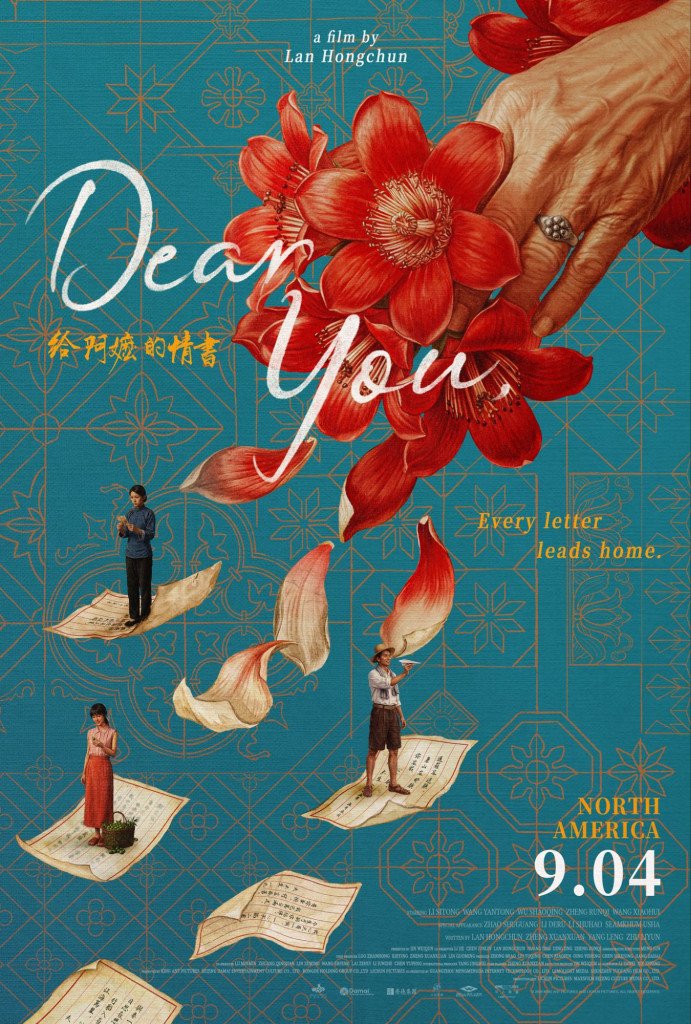
Dear You opens in theaters on September 4 from Well Go USA
Study and critique of Asian film has its share of surprises – namely, of all the various dialects there are than a lot of us have come to know in our years. This fact became clear upon reading up on, and watching director Lan Hongchun’s latest drama, Dear You (titled regionally as “Love Letters From Grandma”), which closed the twenty-fifth New York Asian Film Festival this year and opens theatrically this month from Well Go USA following its commercial releases earlier this year.
The task of keeping up with the peculiar details of the film – notably the cast of characters – is another deal considering the names iterated in the film are read differently than in the closing credits and online listings. This is all attributed to Lan’s committment to the kind of production framework in Dear You that he’s been consistent with in his work thusfar, casting actors capable of performing in Chaoshan dialect as he himself is from Guandong Province.
This is crucial in understanding the more sweeping aim of Lan’s vision, as Dear You pertains to an era of Chinese history where Chaoshan people wrote letters to one another from overseas, or qiaopi for that matter. These letters, containing reassurance of safety and/or money for loved ones, is central to Lan’s film, in which communication becomes a core avenue for mutual understanding, and underscores what happens when catastrophe strikes, resulting in years of unrequited truth.
This factor is firmly anchored in the introduction of Shurou (Wu Shao Qing), celebrating her eighty-eighth birthday amid a huge family gathering in her rural home. Setting the stage of the film’s deeply intrinsic story is the arrival of her grandson, Xiao Wei (Zheng Run Qi), whose own debts implore him to journey to Thailand in search of his seemingly loaded grandfather, Musheng, who allegedly moved to Nanyang and never came back, and instead settled in Siam and got remarried to another mistress.
This is the only truth that Shurou has come to understand in all her years, while Musheng’s reputation is seemingly that of a man of immense wealth and altruism. For Xiao Wei, it’s a potential gold mine to help him get out of his debts, that is, until a spell of startling revelations begin surfacing, and unraveling the only version of his grandfather’s history Shurou and her family ever knew.
What follows is an epic twentieth century post-war tale of romance and hardship, journeying from the rural villages of Guandong to the bustling streets of Thailand. Young love spawns between Shurou (Wang Xiao Hui) and Musheng (Wang Yan Tong), who marry off and become parents to three children. We learn that Musheng must abscond overseas to find work and avoid being conscripted by the Kuomintang to fight the Imperial Japanese, only to end up in Siam after a series of mishaps.

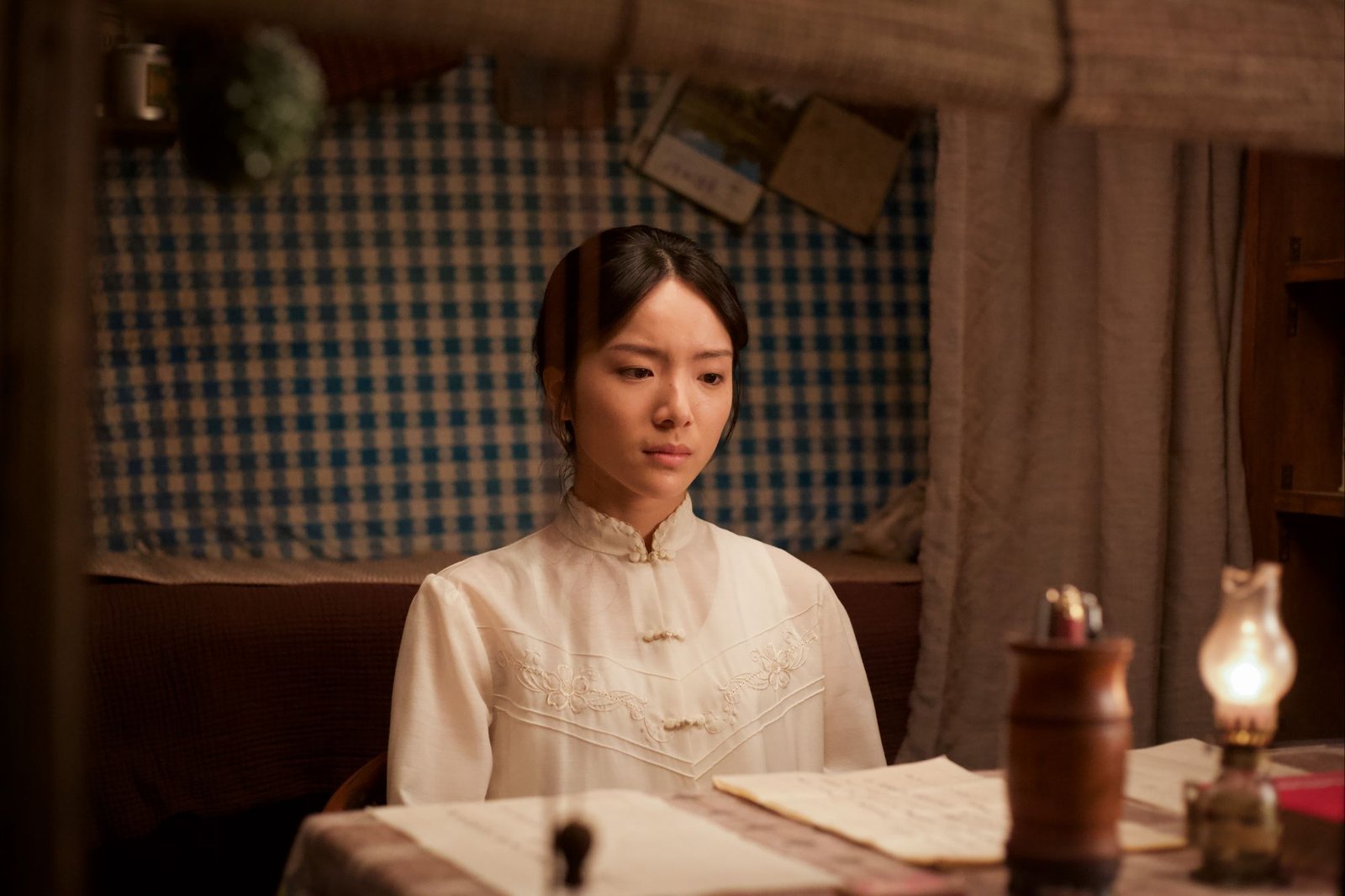
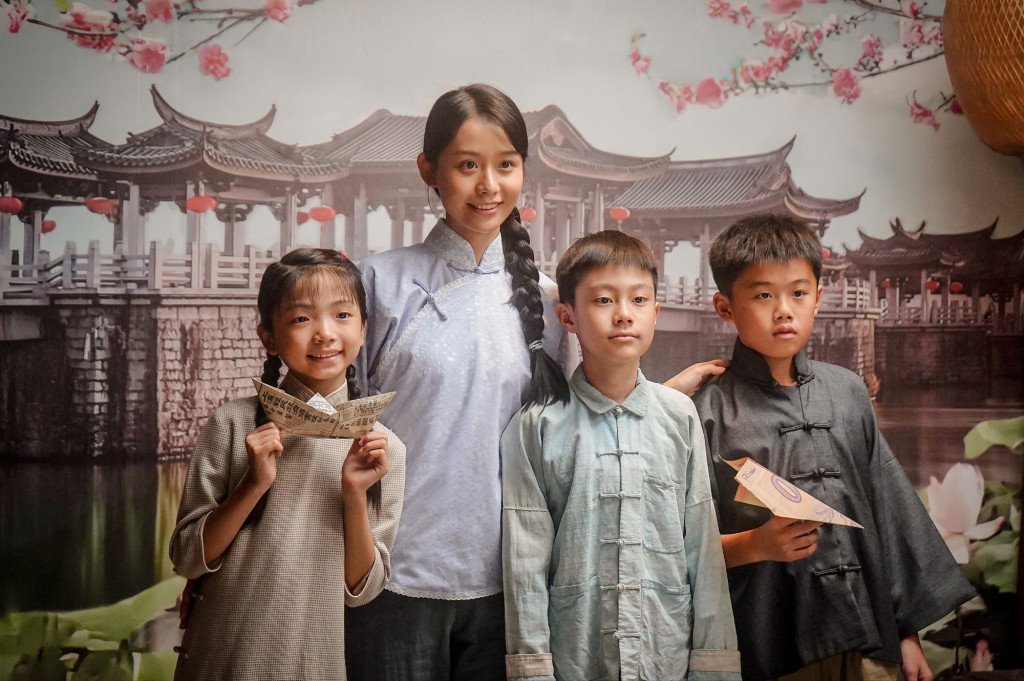
This is where we meet Nanzhi (Li Sitong), who runs the cheapest inn in the city with her father as it mostly houses fellow Chinese migrants. Musheng, with nowhere to go, is reluctantly taken in by Nanzhi, and is accepted by the good graces of its Teochew residents, while Musheng works as a rickshaw driver to save up money for another few years to try and get back home. As friendship finally blooms between Musheng and Nanzhi, Musheng also manages to acquire the aid of remittance employee Di Gong (Chen Qingin) to help teach local kids to read at the inn, despite its illegality.
Director Lan eloquently centers Chaoshan roots in conveying a tale of endurance, redemption, and triumph in Dear You. This includes the very poetic groundwork in Chaoshan dialect that became so entrenched in qiaopi culture that illustrates so well the message that Lan and his team of screenwriters bring to the table in Dear You; Lan also penned up to half of the qiaopi featured in the film, drawing inspiration from the real life stories he read up on and researched.
What starts off as a get-rich quick scheme gradually turns into something so much more transformative in nature, segueing into aesthetics and themes that magnify an era of Chinese history through a palatable and universal lens. The role of Musheng sits at the very nucleus of this aspect of the story, shown in extensive flashbacks that firmly undo any of the perceptions our characters in the current timeline had of him.
Lan’s tangential focus on qiaopi and its impact on literacy rates at the time is just as tantamount, as we follow the ways in which language is used and observed by our characters to express themselves. The role of Nanzhi is the essential focus here, as she becomes the ethereal bridge between to distant lives and families, even in the wake of tragedy. It speaks more broadly, and ardently, to the power of connection that Lan so iterates, from the moment Musheng and Shurou’s love story begins to the cataclysmic events that unfold later.
My only nitpick about the film comes from a technical aspect regarding at least one stunt sequence. The way it performed set off an alarm in my head that’s made me uneasy when it comes to film consumption, which is why I’m not harping too much on this aspect of the film’s assembly seeing as Dear You offers so much more to its audience.
After all said and done, Dear You eventually brings our characters full circle in the film’s finale. The way it does so reminds you of a certain suspense and wonderment throughout the film’s development, leaving the viewer off with something emotive, wholesome and rewarding to the experience. Encompassing it all is the immense work Lan and his team achieve in creating something vast and heartwarming for audiences in Dear You, a movie that stands evocative of ideals like faith and loyalty in all their timelessness.