

W’s Tragedy enjoyed its International 4K Premiere at the 19th edition of JAPAN CUTS: Festival of New Japanese Film
Finally getting to dive into Japan Cuts’ annual round of feature delights brings us yet another starry classic featuring actress Hiroko Yakushimaru in W’s Tragedy, from director Shinichiro Sawai. The movie situates itself as a coming-of-age drama by way of an in-film stage production based on Shizuko Natsuki’s 1982 novel, and I’d even say there are some poetically-implied similarities and nods to the literary IP if select moments in the film are of any hint.
Kadokawa and Toei prospect Yakushimaru is also joined by Masanori Sera in our latest spotlight of the actor since covering Arrow Video’s indulgent V-Cinema bundle for his lead role in Crime Hunter: Bullets Of Rage. Together, the two have a rich chemistry with one another in Sawai’s harrowing odyssey of introspection where a young woman’s ambitions to ascend from understudy to theatrical stage star could come at a grave price. There’s especially a kind of energy about this film that I love, and it could be the result of simply watching a production with Yakushimaru in it, or that Haruki Kadokawa had a hand in producing it.
This film is also the third and latest film I’ve seen of Yakushimaru’s screen resumé after introducing myself a while back to Sailor Suit And Machine Gun and a few years later with Legend Of The Eight Samurai – a film with an energizing soundtrack that has since burned a hole in my brain in the best way. The role Yakushimaru plays here is discernibly less nascent and visibly mature than in previous projects which aptly mirrors the star’s own growth, in my view, pushing her boundaries and really growing into herself as an actor.
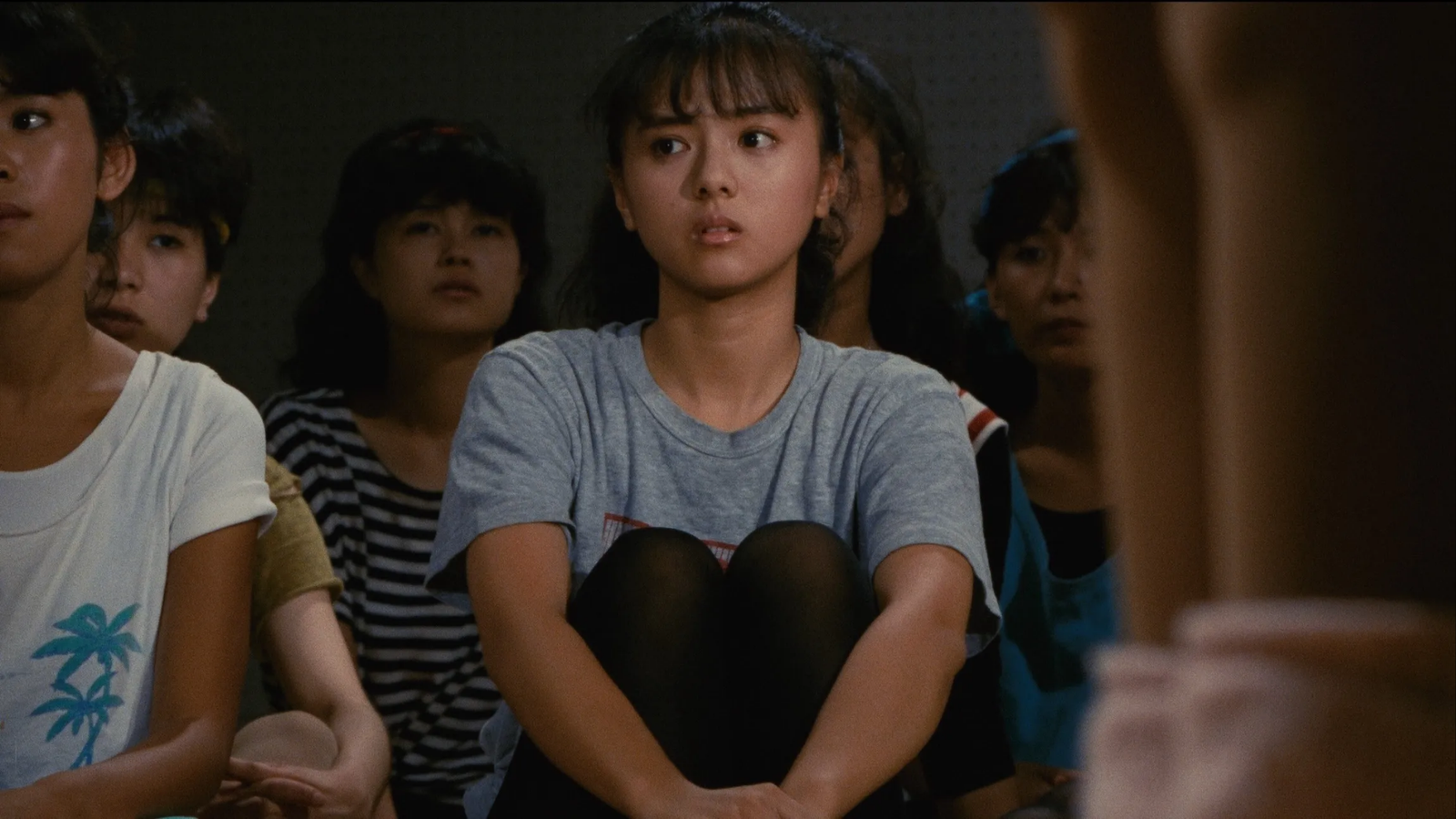
Such a progression is worth acknowledging from the very moment we meet Shizuka (Yakushimaru) as she’s waking up from her latest tryst with an older actor from her institution. Aside from her hustle in her organization’s prep for an upcoming play and the role she’s vying for, Shizuka’s already got ideas on who she hopes her man will be. Alas, that doesn’t put a dent in the efforts of a real estate agent named Akio (Sera) to try and win her friendship and even her affection.
Things soon start to thicken when auditions arise and Shizuka is resigned to a bit part and serving as backstage promoter, while the part she wanted the most goes to fellow colleague, Kaoru (Miho Takagi). It’s from that point on the burgeoning relationship between the ever-fickle and undeterred Shizuka and the persistent Akio begin ironing out the details of their wonky relationship from their first intimate encounter to Shizuka’s often evasive behavior at times.



Imaginably, just when you think circumstances get their uneasiest, a tragic accident happens that could jeopardize the play’s star actress, Sho (Mita Yashiko), providing perhaps the most opportune lightning-in-a-bottle chance for Shizuka to take the stage for herself and claim the star status she’s long sought after. As stated though, the biggest test for the ambitious thespian is yet to come, as a wave of paparazzi and smut reporters craving controversy than anything are just half of the fallout that awaits.
Right alongside other 80s IP of fame-chasing yesteryear greats about rising stars hustling their hardest and enduring the grit and grime, W’s Tragedy bodes as a compelling profile of what it means to strive for greatness. Par for the course are the cattle call auditions and rigorous courses that come with the lifestyle of hungry actors, taking cues from the likes of Adrian Lyne and Alan Parker among others, and with Yakushimaru glowing on screen as an imperfect girl yearning for more. The way she’s resigned to doing so in the second half lends the film its strongest inflection point yet going into the final act, and believe me, what happens long after the roses and extenuating ovation will have you screaming something loud and expletive, at least in a way that Sawai probably wouldn’t have minded.
Sawai, who co-wrote with Haruhiko Arai and Shizuko Natsuki, also frames the film in such a way that proffers an unflinching look at hustle culture through a woman’s lens. Moments like when a fellow acting classmate is rushed to the hospital due to a medical complication, to when the play’s star weighs the pros and cons of dealing with a situation she then supplicates Shizuka with, occur on the peripherals to Shizuka’s own goings-on as a twenty-something with no designs on settling down with just anyone, all the while enjoying herself and her life with her own convictions, and fully immersing herself in moments that might overwhelm virtually anyone else in her shoes. It’s a notable aspect that even as thick as things get, there’s still an air of sincerity between Shizuka and Akio that lingers.
In the second half of the film, there’s a profound shot of Shizuka gazing at her reflection: her costume partially stained in blood that almost certainly speaks to the themes echoed in W’s Tragedy that signify it as a memorable classic. Yakushimaru is a remarkable talent and as someone who’s only just begun finding proximity to her work on occasion, I’m glad she’s still getting her flowers these days. Now, if you’ll excuse me, I’m gonna go listen to “Plastic Love” for a little while…