


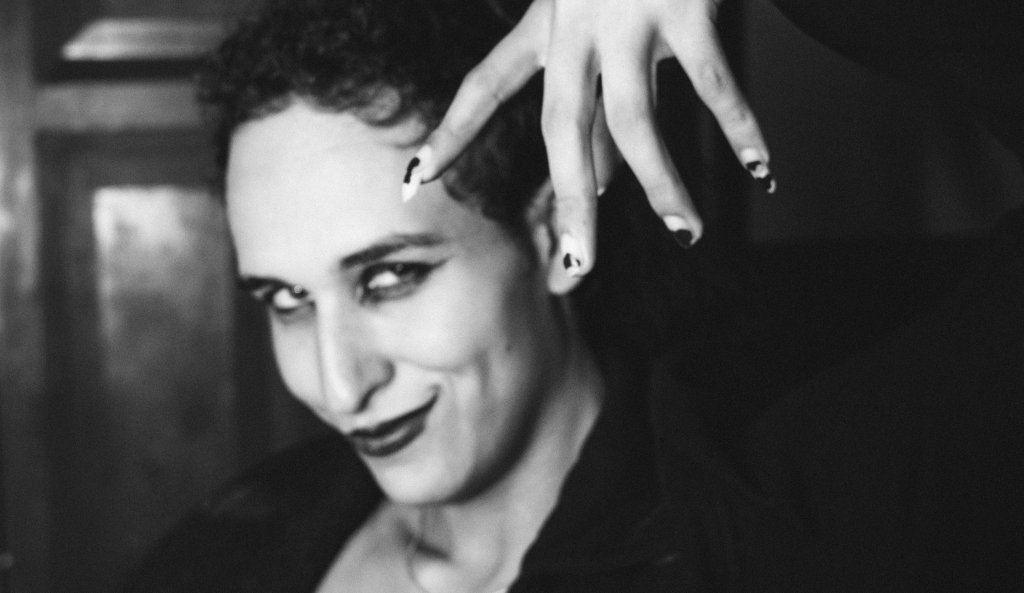
It’s nearing October and I’m just coming off of my eighth year of festival coverage. It honestly feels good to have a little more room to breathe before next year, particularly now that I can focus my attention a little more on spot coverage going forward.
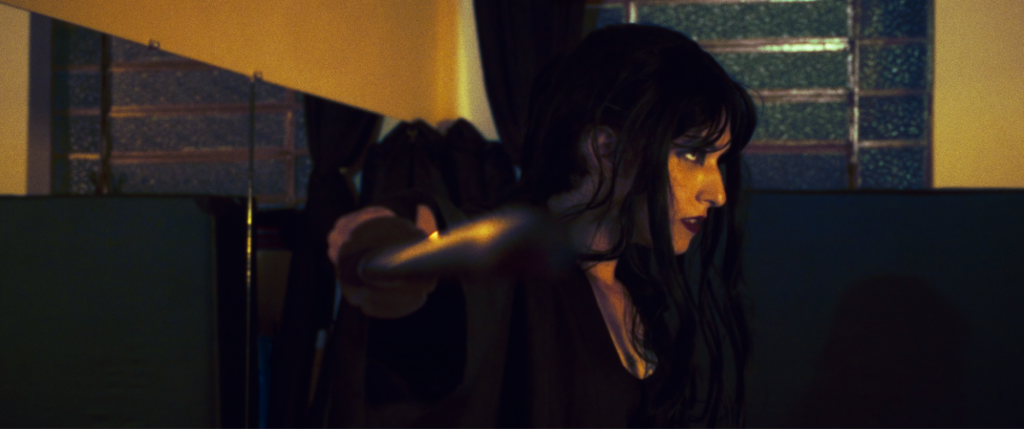
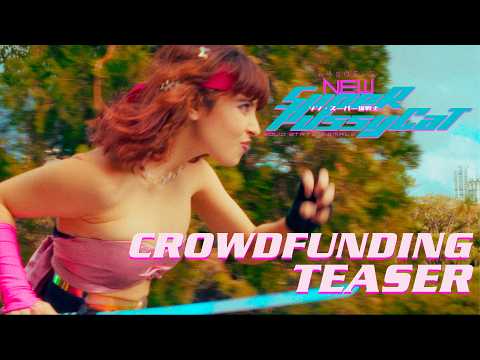
At the moment, this particularly pertains to the upcoming Kickstarter campaign launching this week for a new inspired action short titled New Super Pussycat, from actress and director Jill Gillespie (a.k.a. Lady Jill/Sister Jill). Her latest short, Wakashu, the story of a transwoman who fights back against a gang of assailants, is playing at film festivals this year, including the fourth edition of Big Bad Film Fest last month.
In light of this, Gillespie just recently took to the A4E Podcast to discuss her career and goals, including the production of New Super Pussycat which she looks toward filming later this year. Gillespie generously alerted me of her progress in this regard just last week, and I’m thrilled to help spread the message.
I follow Gillespie on Instagram and BlueSky, and I invite fellow action fans to do the same to keep up with her endeavors. In the meantime, here’s the actress and creative herself making her debut on Film Combat Syndicate for our first Q&A below, with set pics from Wakashu, details on New Super Pussycat, her thoughts on the current state of independent film, queer action cinema, and more.

Thanks for taking a moment for this Q&A Jill. How has 2026 been for you thusfar?
Thank you for having me! 2026 has been a wild ride, but a good year overall, I really can’t complain.
My first dive into your work was your most recent action short, Wakashu, but you’ve also worked on different kinds of projects, and so I want to start off by helping readers get to know you and how you got started in this journey into film.
So WAKASHU was the first short I’ve released, but it wasn’t the first thing I’ve worked on. I started as an editor, I’ve edited shorts that, despite having completed my part, went on to remain unreleased, and others that had very delayed releases – my friend Leena Santos’ horror short “DOPPELGÄNGER”, which I edited and color graded, and was AD on set, we did that in 2023 but it was just released now on HorrorHound.
In 2024 we had the crazy idea of making a feature in six days – that was actually my first directorial effort, co-directed with Leena and her husband LuPi Rodrigues. Post-production was really long for that and it is just now coming out, having had its premiere in a festival in Rio de Janeiro. It’s called TALES OF A WANDERING CITY GIRL. After Wakashu I also directed a horror short called “Angel’s Fig”, which is now in its festival circuit, and me and my classmates did this impromptu short during summer vacation (which is really winter vacation in Brazil) called “Will We Dance Tomorrow?”, which is a time loop romance divided in four parts where each of us directed one of them. My section has a fight scene. [laughs]
Tell us more about your martial arts background, and was it always your goal to intertwine that aspect with your film ambitions?
I started doing martial arts from a very young age. I was about eleven when I first started Shotokan Karate. Later in my teens, I had to stop, and now recently after my transition I’ve decided I wanted to take it on again but I went to Taekwondo. Because I’ve been on and off with it (TKD is also on hold right now because I’m finishing my film school) I haven’t gotten to my black belt yet, but it’s very much a goal. And my interest in martial arts came from watching movies, Jackie Chan and Hong Kong movies were part of my childhood and I grew to fall in love with that, so it felt only natural that, when I became a filmmaker, I would also take on this road of making these films.
You definitely bring those two aspects to life in Wakashu, and congratulations again on making it to festivals with that project. How did you come up with the idea?
Wakashu was, actually, not really supposed to be a short film. It was supposed to be a proof of concept reel of sorts for a feature project I have – we don’t really have a well fleshed out scene of action movies in Brazil, definitely not one of martial arts, we’re only starting to get a few ones here and there, so I really wanted to show off a well done action sequence, starring a transwoman. But people started joining in and getting very excited about it, so I decided to amp everything up and do it as an actual short film. And good thing that I did!


Talk about the reception you’ve received with Wakashu thusfar, and what it means for you as a trans artist and performer.
I can confidently say that all the best things in my life right now have been, in one way or another, result of this movie. I didn’t expect it to play as many festivals as it did, and I definitely didn’t expect it to become as beloved as it is. I read every review and it still baffles me how some people are enthusiastic about it, both from the action niche and the queer niche, and it makes me deeply happy and fulfilled that it’s managed to resonate with those audiences.
Is Wakashu something you’d like to expand on as an independent feature concept at some point in the future?
Definitely, yes. Well, like I said, Wakashu started off as a proof of concept for a feature project. That movie is called “All Dolls Go to Heaven”, it’s a full action feature with an entire cast of trans people, script is written, 90 pages long, it’s even won a writing award in Brazil, but it’s a bigger project so as an emergent filmmaker I’m struggling to get it made.
You have a new project called New Super Pussycat that’s now in the works. How long have you been developing this one?
So I’ve mentioned I’m finishing film school this year; NEW SUPER PUSSYCAT is my thesis film. I’ve been developing it since last year, since I already knew I’d need a thesis film and I knew I wanted to do action again, but also that I wanted to do something different.
Given its Tokusatsu and Hong Kong action influences, I feel like I need to let you have a moment and lay out what – in Jill’s eyes – are the best titles out of Hong Kong and Japan that have influenced you to this day. You did mention Tsui Hark in our previous exchange so I thought you’d want to build on this, or any recommendations you’d have in mind.
There is a LOT. I mean, obviously all the Jackie Chan and Jet Li stuff I grew up watching, but during the pandemic I went head-on on a deep dive on the Girls with Guns genre and fell in love with Cynthia Khan and Moon Lee movies. The early Michelle Yeoh stuff too. “Angel Terminators 2”, “In the Line of Duty 3”, “Royal Warriors” are some of my absolute favorites.
Specifically for NEW SUPER PUSSYCAT, Johnnie To’s “THE HEROIC TRIO” was the big HK influence. I remember watching that and my jaw was on the floor. Over to the Japan side of things, the main influence is CUTIE HONEY – I’m a fan of Go Nagai’s universe in general and have seen nearly every version of Cutie Honey there is, but specifically the live-action 2004 movie by Hideaki Anno, and the CUTIE HONEY: THE LIVE tokusatsu show. Then there’s also the older Kamen Rider shows – Kamen Rider Black and Black RX were the main ones – and Juspion, which is an older toku show that was a massive hit specifically in Brazil more than anywhere else – even Japan. There’s elements of all of those in what I wanted to do for New Super Pussycat.
Tsui Hark came up by the committee I was pitching the project to at school, and I hadn’t yet quite started to dive on his work but it made perfect sense to me, so I got started on studying it – then I watched GREEN SNAKE, and I was floored by it. It’s the kind of poetry drawn by visuals and colors I want to make with this movie, it’s really mythic and epic but also deeply emotional. So right now I’m diving into Hark’s wuxia stuff for more inspiration like that.
How soon are you looking to film New Super Pussycat after the campaign ends?
We are looking to shoot at the end of November/beginning of December. Pre-production is currently underway and we’re rehearsing right now, doing fight choreo and all of that!
It’s not easy to crowdfund a film project, so I’m curious to learn if there are any contingencies in place for you and your team in this regard. To this, I also want to know, from your perspective, what’s been the most challenging aspect for you as a filmmaker, and what are some of the ways in which you’ve overcome those hurdles to this day.
Well, it’s smart to ask about both of those things in the same questions because I think funding is the number one challenge, haha. The good thing for us, and it’s why we decided to make this crowdfunding campaign for an international audience on Kickstarter, is that international currency is worth a lot more than Brazilian currency, so we are able to keep our crowdfunding goal tight – our goal is only 2k, and if we hit that it covers our budget when transferred to our currency. So we’re really hoping to hit that goal.
As far as contingencies go, we’re also taking other actions locally to fundraise, we’ll be throwing a Halloween party this coming month, and I’m willing to put as much as I can out of my own pocket to help out in production costs. Thankfully I also have a team who are real partners and understand the nature and hurdles of independent filmmaking, so they’re absolute team players in terms of doing what they can to make this thing go forward.
What are some key lessons you’ve taken with you as a filmmaker and creative that perhaps others who might be reading this can do good to learn? Additionally, what are some things you’re still learning these days?
A big lesson I learned from “Angel’s Fig” was draw your movies. As a less experienced filmmaker, WAKASHU didn’t have such a well designed shot-plan aside from what we were able to make of an action design (which we didn’t have time to cover the entire choreography).
In “Angel’s Fig” I decided to storyboard the entire thing, I drew every shot of that movie – it was shot in one 12-hour daily, and it has 50 shots, which was only possible because I had everything drawn and planned. Had I done that in Wakashu, we probably would not have needed to cut some parts of the choreography that didn’t make it into the film because of the time.
I’m taking that lesson into New Super Pussycat – doing the full storyboard in addition to the action design for the action sequences. And right now, I’m still learning how to best conduct this specific part of production – choreo and rehearsals -, taking what I experienced from Wakashu and saw my colleagues experience in their movies and applying those lessons here, seeing what works and what doesn’t.

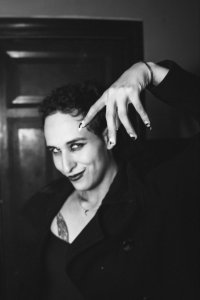
Photo: Nanda Muller
I want to thank you again for taking the time to answer my questions, as timely as things are and as busy as I know you are with your endeavors. And, I also want to thank you, generally, for Wakashu. You bring something different, genuine and awesome to the floor, and I’m excited to see what more you can do going forward.
I’m the one who should be thanking you for taking the time to give me a platform, and just for having seen my movie at all. Everything I’ve done has been really independently, really low-cost, as I really don’t have a lot of resources, means or funds at my disposal, so every time someone gives the work of someone like me a shot at exposure, it means a hell of a lot. I’m excited to show a lot more to the world!
Is there anything you’d like to share with readers as we make our exit?
Well, we’ve all seen that even Lilly Wachowski, creator of one of the single greatest movies of all time in THE MATRIX, is struggling to get her little action-thriller with a trans cast funded. It’s not easy for us. There aren’t action movies by trans people, but we’re really trying to make them. So please support trans cinema, support independent filmmaking, let us bring something fresh to the table. I promise you the stuff we have to show is unlike anything you’ve seen before!