


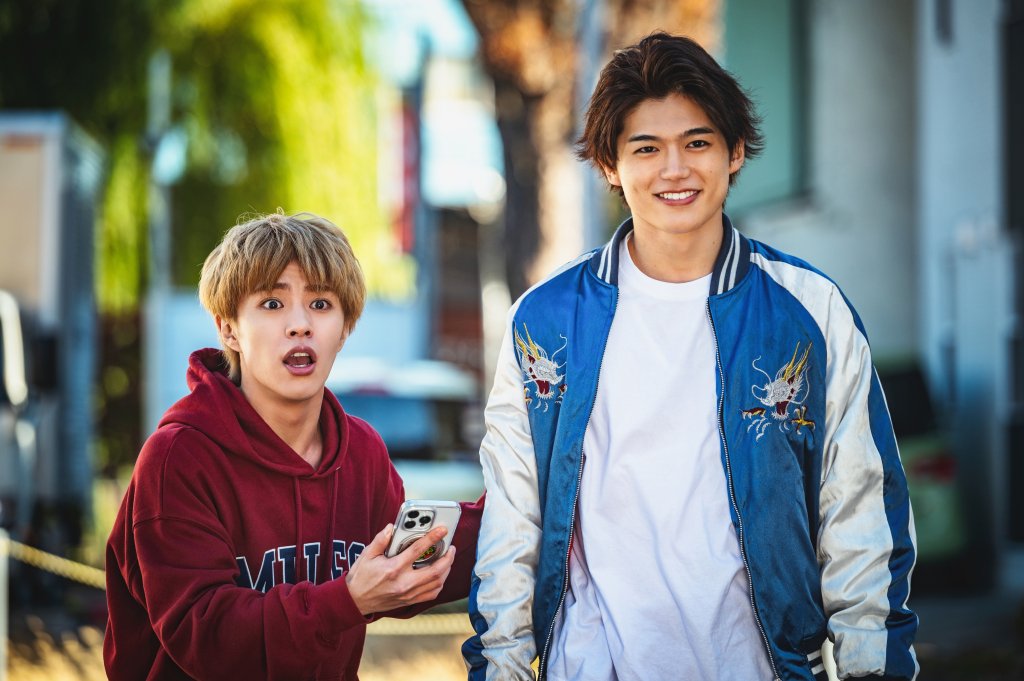
Match Monde enjoyed its World Premiere at the fourth edition of Big Bad Film Fest. The movie opens in Japan on September 11.
Street fighters and troubled youths are back on the menu for anyone who’s up for some delinquent brawls on the big screen this year out of Japan with the internationally-titled Match Monde, the newest live-action adaptation from director Ryusuke Kurahashi. Coming from a line of TV projects Kurahashi makes his directing debut based on Shogo Horiuchi’s Young King (Shonen Gahosha) publication, “Match Mondo,” which gets a cast led by Kotaro Daigo who appeared more recently in season three of Netflix’s Alice In Borderland and in films like Hiroshi Shinagawa’s Out and Tsutomu Hanabusa’s Romantic Killer to name a few, and relative newcomer Katsuki Masayoshi.
It sort of makes sense that Kurahashi would take on a movie like Match Monde, particularly considering he’s a protégé of V-Cinema stalwart Takashi Miike, who’s resumé in beat ’em up high school romps is an outstanding one with needle drops like Crows Zero and more recently with Blazing Fists. That Kurahashi also has Baby Assassins shepherd Yugo Sakamoto at the pen along with Kensuke Sonomura’s U’den Flame Works cohort Naohiro Kawamoto (Hydra, The Furious) steering the action makes for an enticing combo, coupled with a proficient cast that also lists HIGH&LOW franchise staple Gouki Maeda carrying the torch as antagonist. To this, the movie ultimately suits itself to a niche that favors stories centered on boyhood travails, headlined by a bevy of characters with hearts of gold, all right down to the meanest of the bunch.
Whether or not this is a benefit or a deficiency to the film is anyone’s guess depending on your tastes. I did find it fascinating at times, endearing in certain moments, and even hilarious when a good zinger is required. The film’s use of flashbacks gets a little jarring if you’re new to the source material and you’re not tuned in, although the best part in this aspect is that for at least one moment, the movie isn’t afraid to get a little meta to keep the audience’s attention. It’s indicative that Kurahashi can tell a fairly decent story at an ample pace, and maintain interest with a pragmatic approach to entertainment that isn’t too self-serious or self-involved in this instance, and I love that.
Keeping things anchored accordingly is a plot that kicks right off just as Mikio (Daigo) is being chased by a trio of goons before bumping into an unsuspecting passerby named Mahiro (Masayoshi). The moment is the start of an uneasy friendship consigned by an opportune partnership that Mikio proffers to Mahiro with a mobile app that pairs its users as entrants to fight each other for cash prizes and viral fame. Interestingly, Mahiro’s motivation for fighting anyone is more do with anything else but money, although fighting isn’t exactly an option for him either, particularly as someone whose chummy and amiable predispostions with others usually precedes his otherwise veiled reputation.


Additionally, Mahiro’s priorities are more focused on helping childhood friend Suzuna (Honoka Kawasaki) run her family’s café and maintaining his rapport with fishmonger, Uncle Ebara (Yoshiyuki Yamaguchi), and for what it’s worth, he also has a moral compass when it comes to violence. One moment exemplary of the latter is when he and Mikio discuss the matter, as it pertains to Mikio and his reluctance to come to the aid of a friend being bullied in a bathroom, while posing as a fighter on an app where strong people target the weak to make money. Compelled to remedy this wrongdoing, Mikio takes matters into his own hands by squaring up with a burly, eccentric gangster named Umezu (Takuro Osada), and it’s only then that Mahiro resigns to picking up his fighting prowess once more to help a friend.
This all relatively takes place in what feels like a brisk, lithely written story truncated from a much larger episodic (I only say this as I’m not familiar with the original material, and only as someone who’s watched his fair share of dramas to make the compsrison). From that point on, the story follows Mikio and Mahiro as they both tread the uneasy management of Suzuna’s café where Mahiro’s once presumably safe workspace soon gets occupied by the same community of delinquent all using the app. Adding to the stakes how is their earlier scrape with Umezu has gone viral with other users ginning up talk of challenging them on site. Topping all of this is the arrival of a new elite thug in the form of Mairu (Maeda), who’s got his own designs on being the only tough guy left standing in the underworld, as he sets his sights on defeating a reputable fighter who may be closer than he realizes.
Surprisingly, the more you watch Match Monde, the less prevalent the app becomes as a plot device whereas the film’s story focuses more squarely on the characters at hand; Screenwriter Sakamoto’s work presents a delightful illustration of youths faced with coming-of-age hardship and lessons that each come with a heavy serving of growing pains, literally and figuratively. More laterally, app itself is an ample plot tool in highlighting the kinds of economic woes that stare today’s generation of incumbent adults all faced with an uncertain future. It’s not necessarily the film’s main focus, but it’s worth jotting down in reflecting on the film’s delivery.
The cast is remarkable in their handling of these characters, with Daigo and Masayoshi gelling excellently as burgeoning friends amid all the calamity. More crucially, the crux of this pairing is a lot to do with getting to see Masayohi move on screen as an element all his own as the formidable Mahiro, while simply existing as the average young adult everyman he tries to adhere to, along with an insatiable appetite for chicken burger combos and other simplicities in life. Actress Kawasaki’s portrayal of Suzuna amounts to modest screentime while leaving a discernible impression as someone Mahiro tries his best not to disappoint.

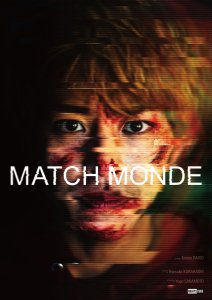
Yamaguchi, who makes his return to Big Bad after throwing the gauntlet down in the World Premiere of Hiroyuki Tsuji’s “Nihon Toitsu” action spectacle, Isolated, chimes in handily with the respite laughs as a fishmonger whose daily wardrobe comprises of an apron covered in fish blood and a knife he casually carries and waves around even amid conversation. The reactions he gets from time to time are equally hilarious, as are a few of the other zingers and character moments in the film. Maeda’s portrayal of Mairu adds to the crop of complex characters with motivations later conveyed in flashbacks that help make sense of things, and noticeably among the supporting roster is Blazing Fists and Tokyo Burst actor Danhi Kinoshita who plays one of Mairu’s henchmen.
The aforementioned Kawamoto’s action design does awesomely for Match Monde as a film situated deeply in Japanese cinema’s current action film renaissance. What the film might lack in potency and pace at times, it makes up for in living up to expectations as an action adventure for eager fans of the genre, with a few awesome one-on-ones, and physical movement and stuntwork that easily passes muster, especially if Japanese action films have been on your radar any in the last decade or more. The recapitulation fizzles somewhat, but only until reaching a more jubilant finish that feels like the start of something potentially more enjoyable.
Kurahashi’s Match Monde is a delightful watch to bookmark on the map of stylish, scrappy Japanese action showcases. Daigo is fun in his pairing with Masayoshi who puts on a hell of a showstopper that signals action stardom next to that of Maeda, and with fight choreography that’s long set a precedent that is still energizing a generation of action fans.
In whole, more could have been done to make the app central to the film’s atmosphere. That won’t be the case for anyone going into Kurahashi’s film, which still extrapolates the most out of a familiar essay on themes of friendship, grief and what it means to be fearless. In that case, consider Match Monde as a compatible watch for your viewing needs.