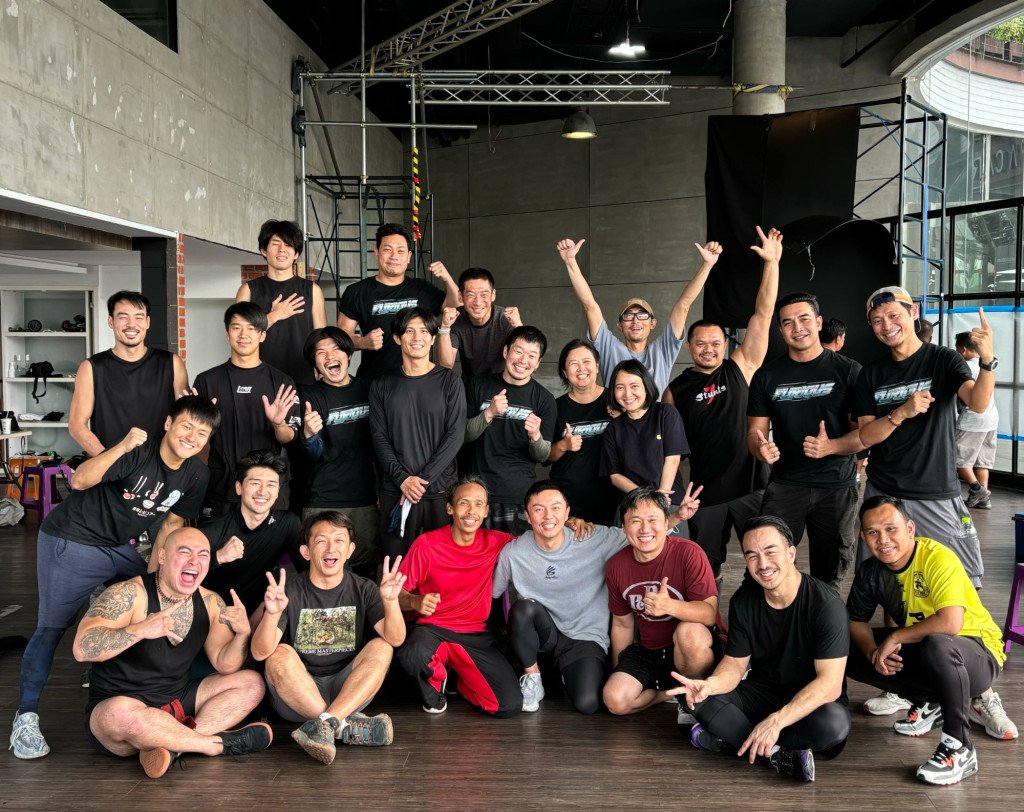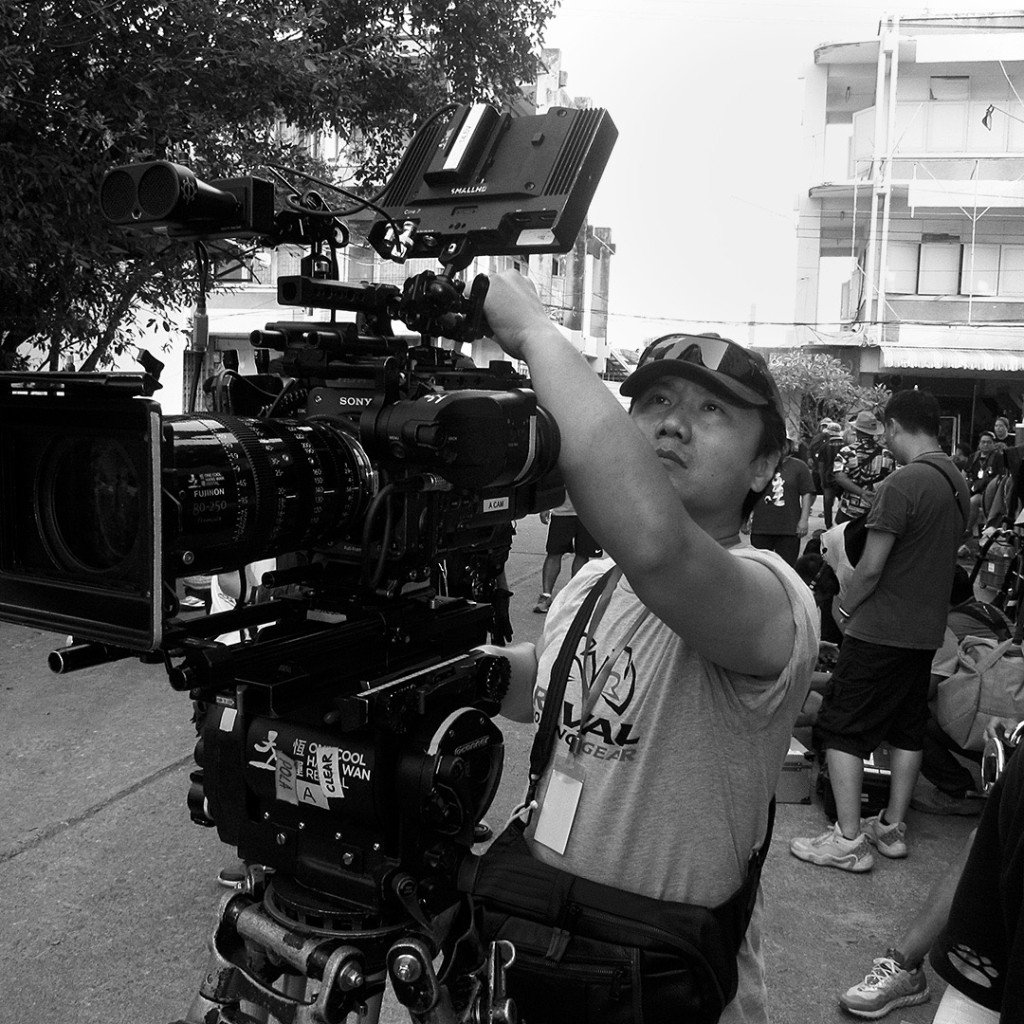

I’ve been most fortunate to be able to network with certain folks in the stunt industry from around the world, including and namely action director and filmmaker Kensuke Sonomura. From Hydra to Yugo Sakamoto’s Baby Assassins films and 2023’s Bad City, Sonomura’s work continues to speak for itself, and most fans who follow action cinema with an eye toward the Japanese film industry would agree.
It’s also played a major role in how Sonomura was able to get on board for the production of Kenji Tanigaki’s latest Hong Kong-produced Asian action ensemble, The Furious, which features a bonecrushing handful of stars led by Chinese screen legend Xie Miao as a father searching for his missing daughter throughout the city’s criminal underbelly. The film also stars Joe Taslim, Joey Iwanaga, Yayan Ruhian, Brian Le, Yang Enyou, Jeeja Yanin, Sahajak Boonthanakit, and many more.
The film is pitching a worldwide release early this month, with Lionsgate unleashing the very fury of this film’s excitement onto screens on June 12. Until now, the movie had spent the past more than eight months taking the collective breath away from all the festival and press crowds it’d been playing in front of since its World Premiere last year in Toronto. Sonomura happily dives into it all, including some new details about the film’s production and what entailed in the intricate process of designing the film’s elaborate action scenes.
To add, I also tacked on a little inquiry about some of the other work – namely his action design on the new jidaigeki action episodic, “Song Of The Samurai,” HBO Max’s iteration of the “Chiruran: Shinsengumi Requiem” series adaptation based on the hit manga. The show is now streaming in Japan so this interview was done some days afterward – prior to the show’s release here in the states. I don’t have HBO Max myself, so I hope to catch some episodes on VOD at some point if possible, or on Blu-Ray if we’re lucky.
I also want to preamble this interview with a few things: The headline alludes to his style of choreography and vision which he discusses a little further down the interview. Additionally, Sonomura addresses the latest update following news that broke last week of a potential sequel, by way of a statement made over at Dread Central in an interview with executive producer of The Furious, Edko Films Ltd.’s Bill Kong; That statement reads how Kong and his team are always thinking about a successor to the film, exclaiming at least one promising factor in that “…if there’s going to be a sequel, it will be a better film than the first one…”. I brought this up with Sonomura in the weeks following our initial exchange for the following interview which I’ve edited into the text.
This interview is also my second interview with Sonomura since 2023 with the promotion of Sonomura’s second directorial effort, Bad City. I loved sharing a dialogue here, and I think you’ll equally enjoy reading it too. Check it out below, and tune back to my review of the film for good measure!

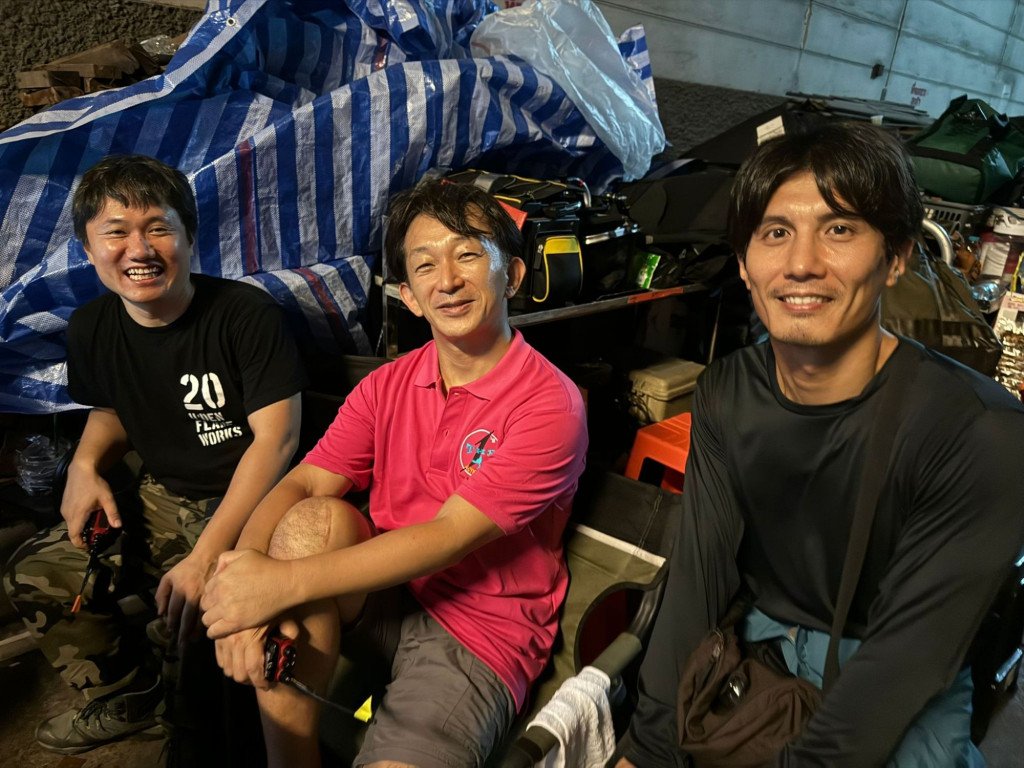
Kensuke-san, it’s an honor having a dialogue with you again on my platform. How has the year been for you thusfar?
From January until three days ago, I was working as an action director on a film. This film is a police-themed action comedy. I’ll be starting on my next project soon, and I’ll also be involved as an action director on that project.
Indeed you’ve kept busy in recent memory, especially in the past few years with projects like The Furious coming out. Talk a bit about your friendship with director Kenji Tanigaki and how you came on board this project.
Kenji-san is my senior, and we’ve known each other for over twenty years. I’ve occasionally helped out as a stunt performer on films where he was the action director. However, I had never had the opportunity to work with him for an extended period. This was because I often assisted Yuji Shimomura, the representative of U’DEN FLAME WORKS, the company I belong to. I only helped out with Kenji-san’s projects when Yuji-san didn’t have a project of his own, so he was both close and distant to me. Additionally, as I myself became an action director, opportunities to work together as colleagues in the same industry decreased even further. I think it was around the summer of 2023 when Kenji-san called me, which was unusual, and asked about my schedule for 2024.
Usually, when Kenji-san asks about my schedule, it’s to ask if I can take on some work that he can’t do, so at first I thought it was that pattern. But when I asked what it was about, he clarified and told me “I actually have a project. I’m directing a movie, and I’d like you to be the action director.” I wondered why Kenji-san would choose me, since he is also an action director. We haven’t worked together for a long time, and our styles are quite different. Then Kenji-san told me why he offered me the role. Apparently, producers Bill Kong and Frank Hui saw my directorial work on Hydra which released in 2019, and thought it was very innovative, so they said they wanted to do something similar. Kenji-san said, “I thought it would be most logical to call on the person who made that, so I contacted you.” I rarely get the chance to collaborate with Kenji-san, and I was simply happy that my style was in demand, so I decided to accept the offer.
There’s no question that fans want this to be an amazing film, but executive producer Bill Kong really set the tone in 2024 when he touted the overall end goal was for this movie to “rock the world”. I’m curious as to how high you would say the expectations were on this project for you, personally, as its action choreographer.
What I initially heard was that films like those from the golden age of Hong Kong cinema, which rely solely on physical expression without digital technology, are on the verge of extinction. Even when viewed today, films from that golden age offer new discoveries and are deeply moving. This is because the overflowing energy of real human beings is firmly imprinted on the film. Therefore, this project is a return to the roots, and the goal is to create a completely new, ultimate action film made with a modern sensibility.
For me, this was a project that put a lot of pressure on me, but at the same time, I was excited because I thought it would be a very rewarding project. Japanese action movies are known for having extremely short filming schedules, but this time I felt fortunate to have a wonderful opportunity to escape those constraints and unleash my own limitations.
How pertinent was it for you and Director Tanigaki to have a cast with such a versatile skillset in screenfighting and practical movement in that nature? I ask this because, indeed, there are plenty of good action films whose cast aren’t comprised of highly-trained martial artists, but who otherwise train plenty to make scenes work and deliver for audiences.
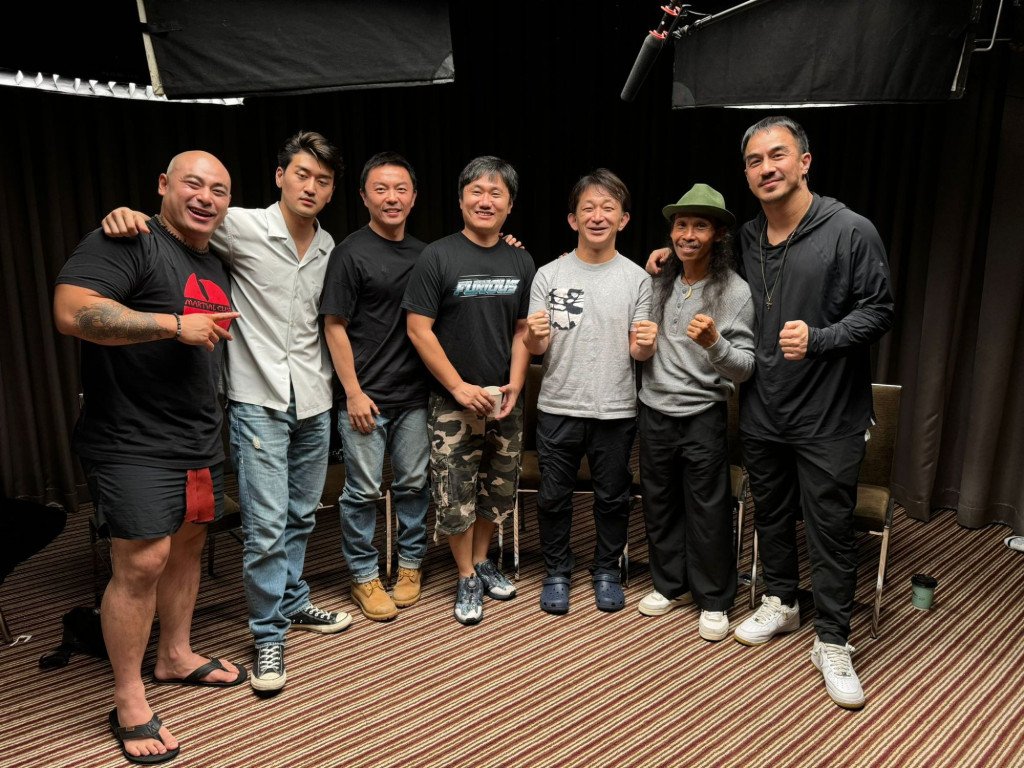
I feel incredibly fortunate to have had such a great main cast for this project. Above all, it was clear that everyone loved action, even without a common language. That’s why I believe that when we all share our opinions, it can only lead to a better film.
Each character has a different skillset with at least a few of them coming with modifiers, including the lead character played by Xie Miao. I loved watching him and how he moved, and the way he was written which speaks to just soulful of an actor he is along with his screenfighting.
Talk about working with Xie and designing this character and how he deals with these situations.
When I first met Xie Miao, several pre-visualizations of the action scenes were already completed. I told him to tell me if there was anything he was good at or anything he wanted to change, but he said, “Nothing! My previous Xie Miao style isn’t needed in this movie!” I was very impressed by that. For a star with such a long career to abandon his established style and try something new takes a lot of courage. And I think he exceeded my expectations!
Kenji-san asked me to come up with a distinctive fighting style for Wang Wei, played by Xie Miao, something like a signature move, so I explored new ways of expression while basing it on the kung fu style. The first thing I noticed was that the kung fu style up until now had a unique rhythm. This has both good and bad aspects. The good reason is that various poses are clearly visible, successfully conveying the characteristics of kung fu to the audience. However, the bad reason is that in previous kung fu movies, all the various martial arts that confront kung fu also end up adopting the rhythm of kung fu. So I focused on that and this time I adopted the opposite idea: kung fu adapting to the rhythm of street fights and modern martial arts. I incorporated as many practical elements as possible, such as the maneuvering and feints used in boxing and MMA matches, and tried to eliminate overly beautiful movements as much as possible, adjusting the choreography to a raw and ferocious fighting style.
Xie Miao understood my intentions perfectly and performed it brilliantly. On set, I told Xie Miao that this kung fu style is like “Japanese-style ramen.” What I mean is that ramen originally came from China, but in Japan it developed into something different to suit Japanese tastes. Similarly, this kung fu style is a Japanese interpretation of kung fu, so it may be different from authentic kung fu. However, having it performed by the authentic Xie Miao adds credibility, and I think a good chemical reaction occurred.
I also read that you and the team rehearsed the action scenes for about a month in a disused car showroom before production. Talk about the process here for us because I can only imagine you’re creating and conjuring these scenes and you might have all these ideas in mind, but you had a MONTH to try put it altogether and make it work. Were there any ideas on the table that had to be shelved? Talk about the challenges you faced here for us.
We actually spent about two months in Japan preparing before heading to Thailand. While in Japan, we experimented with many ideas for the characters’ styles, and once we had a rough idea, we scouted locations in Thailand and built the movements that would be used in the film. It was impossible to design all the action scenes in just one month, so even after filming began, we used days when the stunt team wasn’t needed to choreograph, which was really tough. Since there were action scenes almost every day during filming, we were constantly chasing deadlines, and looking back now, I want to give myself a pat on the back. [laughs]
I know you’re as much of a martial arts film fan as anyone around here. So, in addition to working with Jet Li’s on-screen son, what was going through your mind knowing you were gonna get to action-direct (quite possibly) the next great Asian action film with Xie in a starring role for such a pan-Asian ensemble cast as this one?
My image of Xie Miao was strongly influenced by his roles in “The New Legend of Shaolin” and “My Father Is a Hero.” I saw “My Father Is a Hero” in a small movie theater when I was about sixteen years old, and I never dreamed that I would be working with him thirty years later. I think it was around the time I had just joined the Kurata Action Club. Back then, I was just a fanboy, and Xie Miao was someone I admired.
I admired him, thinking, “Wow, there are such amazing people in China, even though they’re younger than me.” That’s why I was so surprised when Kenji-san told me that Xie Miao would be the lead in this project, and it’s very moving to think that I’ll be choreographing for a star I watched when I was a student. Of course, the same can be said for Joe Taslim, Yayan Ruhian, and Jeeja Yanin. I wish I could secretly tell my 10-year-younger self that he’s going to be the one choreographing for the stars of “The Raid” and “Chocolate”. [laughs]
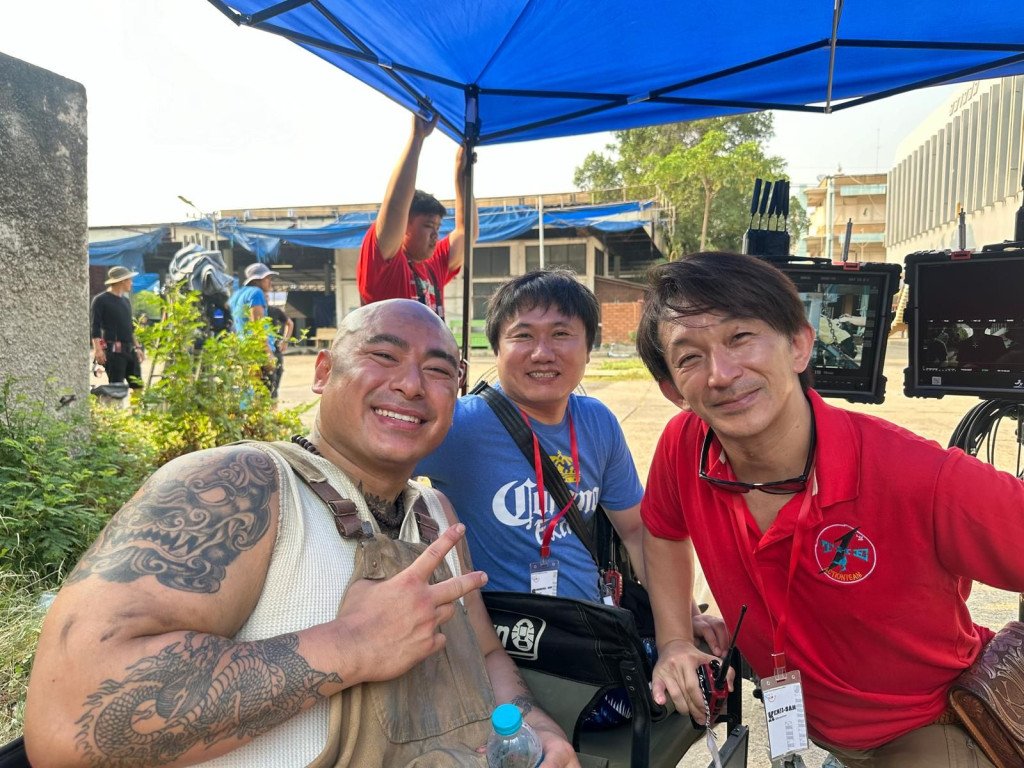
Talk about choreographing and directing the action and how you went about the process. Was the direction pretty much unilateral? Or was it collaborative in terms of the cast and trading ideas and seeing what works and what doesn’t?
Basically, the cast members were very receptive to the choreography. Joe Taslim was full of ideas and made many suggestions, especially regarding the gestures the characters would make. Adding those little gestures completely changed the way things looked, added more depth to the action, and made the audience feel more attached to the characters. That kind of interaction worked very well and exceeded my expectations.
Considering the starpower and momentum this film has, would you say this is the most fun you’ve had on a project?
Yes, especially since the two main actors are close to my age, I hope that the mature, middle-aged strength they possess will spread throughout the world.
What do you think of the reception The Furious has received since premiering in Toronto last year? Also, have you seen the film for yourself?
Kenji-san sent me a video he filmed of the premiere. The long standing ovation truly made me feel grateful to have been involved in this project.
I’m curious to learn if you and Director Tanigaki talked about working together again. However, I’m equally piqued by the mystery of just what that next collaboration might look like, because I believe The Furious definitely did more than raise the bar. So, I’m wondering, (and I say this kind of jokingly) if the challenge of surpassing the bar sort of keeps you awake it at night.
I would love to collaborate with Kenji-san again if the opportunity arises. Kenji-san was very supportive and created a great working environment, so although it might be difficult due to our respective schedules, I am always ready to rush over if called upon. [laughs] And the pressure to exceed the standards I’ve set for myself always follows me. But that’s normal, and I worry about it every time, so I try not to think about it too much. My motto is, “My best work is my latest creation!” [laughs]
Speaking of, what are your thoughts about a potential sequel to The Furious following statements made last week by executive producer Bill Kong?
If a Part 2 were to be made, I think it would be a very difficult road. That’s because they would have to come up with a situation even more intense than the final battle in Part 1. But if there is a Part 2, it would also be a very challenging and rewarding job. First of all, I hope ‘THE FURIOUS’ is a huge box office success.
You also worked on a live-action adaptation of Chiruran: Shinsengumi Requiem, which I’m hearing is doing really well on U-Next, and that show is set to launch on HBO Max on May 9 under the title, Song Of The Samurai. How excited are you for fans of period sword dramas here in the West with someone like Yuki Yamada effectively gaining international movement after the HiGH&LOW films?
I believe that Japanese period dramas are currently a very popular form of content. Thanks to streaming platforms, films featuring Japanese swords, such as “Rurouni Kenshin,” “Shogun,” and “Last Samurai Standing,” can now be viewed by people all over the world, making them an extremely important form of content that can be exported from Japan. However, this also brings with it the fear of mass production of low-quality works. I believe that what we can do is to work diligently and positively on the projects in front of us and nurture this content carefully. “Song of the Samurai” is an ambitious project with a larger budget than typical Japanese productions, featuring top young stars. Fortunately, it has been well-received and is generating a lot of buzz in Japan where it is currently streaming, and its number of enthusiastic fans is growing. I hope it will become just as popular overseas.
We talked at length about The Furious for most of this interview and the latest drama you worked on. Now, I have to ask, because I’ve loved covering your work on Hydra, Bad City and Ghost Killer and Sakamoto-san’s Baby Assassins films. Are you developing anything else as your next directorial effort?
Thankfully, I’ve received a few offers to direct, but right now my schedule is filling up with work as an action director, so unfortunately, even I don’t know when I’ll be able to take on those projects.
I saw an advanced screening of The Furious in April. It was an absolute thrill, and quite possibly has to be my first time seeing your action-directorial work on the big screen. I loved every minute of it, as well as sharing your perspectives on these projects, and I look forward to doing it again. With this in mind, are there any thoughts you would like to share with our readers as we exit this interview?
“The Furious” is a very memorable piece for me, as I poured all my energy into choreographing it at the time. I believe this piece is more enjoyable when seen in a theater, so I hope you will experience it in a theater, empathize with the protagonist, and get excited. Thank you.