


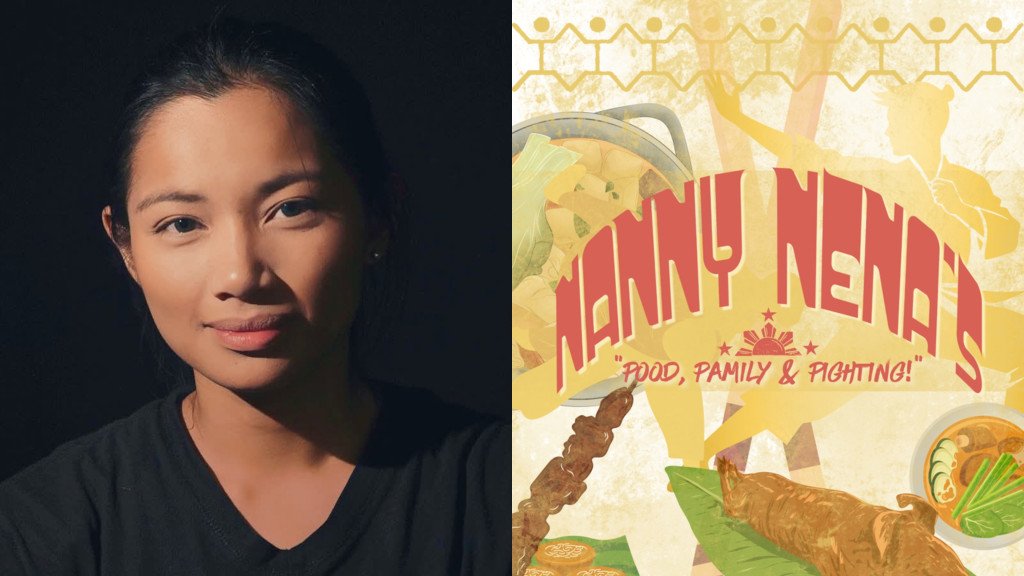
Actor Angela Jordan has been one of the handful of martial arts talents I’ve been eager to see grow her spotlight since she’s come under the banner of Joey Min’s Art School Dropouts label. In the years since then, her output has all but progressed with the group, substantiating a number of hit shortfilms like “Broken,” vertical-shot “Gunslinger Mary,” and their “Legend Of Korra” fanfilm inspired by the Nickelodeon IP, while appearing in Min’s independent webseries-woven feature debut, Yes, Auntie! as a handsome villain with a potent fight finale opposite actress Stephanie Pham.
That was in 2019, prior to Min’s virtual reality-produced RPG fantasy, Player Agency, in which Jordan also voice-performs one of the main characters. As of late, the team at ASDO is stepping back in human form with martial arts action comedy, Nanny Nena’s (WT), which now marks the team’s third venture with Min at the helm, and with Jordan at long last nabbing a lead role, staking her claim with extra dimensions of research as an effort to grow beyond her niche as an actor. That also meant journeying and shaking hands with a number of folks in the Filipino American community, as shown in some of the recent content posted on her socials regarding the topic of what Filipino-American identity really means.
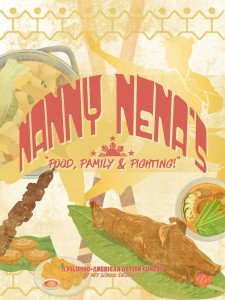
Such themes are set to be explored in the new movie, Nanny Nena’s (WT), which director Min and his team set forth on after having recently finished with another collaboration earlier this year. Here’s the logline courtesy of Pham and ASDO:
After the passing of their beloved Auntie Nena, a large Filipino American family keeps her memory alive through a catering business built on her recipes, generosity, and community spirit.
When Angela picks up her cousin from the airport for a family reunion, she expects an awkward day of deliveries and family obligations. Instead, the pair find themselves caught in the middle of a criminal scheme involving a stolen flash drive, internet-famous troublemakers, and a mob boss determined to get his property back.
Filled with food, family, martial arts, and plenty of chaos, Nanny Nena’s is an action-comedy about carrying forward the traditions that connect us.
Crowdfunding is now underway over at Kickstarter for the production which has since added martial artist and blade tester on the History Channel’s “Forged In Fire” series, Doug Marcaida to the production. Additionally, to help bolster their campaign’s launch on Friday is Jordan speaking on her own behalf in our second and latest interview.

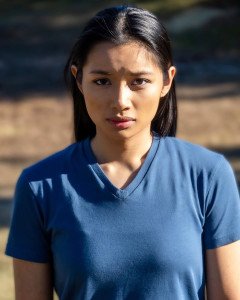
Talk about what it means for you to finally get to star in your first film as an actor?
While this isn’t actually my first feature film as an actor, it is my first time helping lead a feature that’s this personal to me. In Art School Dropouts’ last feature film, PLAYER
AGENCY, I got to play one of the main leads, Rotiart. It was a lot of fun nally playing a character who not only got to punch and kick, but also helped move the story forward through dialogue. Most people know me for my martial arts work, but I’ve always
wanted to continue growing as an actor beyond just the action.
Nanny Nena’s feels different, though. It’s a story that’s incredibly close to home and celebrates Filipino family, food, and culture in a way I rarely saw growing up. Getting the chance to help tell that story as one of the leads is something I don’t take for granted. My hope is that someone watches this lm and walks away wanting to reconnect with their own culture, call their grandparents, try Filipino food for the first time, or maybe even fall in love with martial arts movies the way I did. If we can make people laugh, cheer during the action, and leave feeling a little more connected to the people around them, I’d consider that a huge success.
So yes, I’m denitely nervous, but even more than that, I’m excited. I can’t wait to bring this story to life.
How long have you been preparing for this particular role?
Honestly, I feel like I’ve been preparing for this role ever since the idea for the film was first conceived. Over the past few years, I’ve been diving into Filipino history, culture, and the Filipino-American experience through documentaries, social media, films, books, and conversations with people in the community. The question I’ve kept coming back to, for both myself and my character, is, “What does being Filipino-American actually mean?
Discovering my cultural roots was kind of the existential crisis I didn’t know I needed [laughs]. I grew up as a Filipino-American, but I realized there was still so much about my family’s culture I wanted to understand more deeply, not just for this role, but for myself. Beyond the research, I’ve been taking online Tagalog classes and making an effort to attend more local Filipino events whenever I can. I’m still a long way from being fluent, but I’ve already noticed how much easier it’s become to connect with my elders and other members of the Filipino community. That’s been one of the most rewarding parts of this whole journey. More than anything, I hope that personal journey comes through in my performance. If someone watches Nanny Nena’s and sees a little of themselves in this story, or feels inspired to reconnect with their own family, culture, or heritage, then I think we’ve accomplished something really special.
Can you share or tease how you, Joey, and Stephanie are preparing for some of the action sequences? Any points of reference re: film or style-specific choreo i.e. Hong Kong action, Arnis, etc.
The biggest inspiration is definitely classic Hong Kong action cinema. We all grew up loving those Jackie Chan films where every fight had its own personality. The action wasn’t just about beating someone up. It was creative, funny, fast-paced, and constantly used the environment in unexpected ways. That’s something we really want to capture with Nanny Nena’s. At the same time, we wanted the action to feel unmistakably Filipino. You’ll see influences from Filipino Martial Arts, Kali, Arnis, Filipino kickboxing, and other systems woven throughout the choreography. But we’re not trying to make a martial arts demonstration. Every fight is designed to reveal something about the characters and move the story forward.
One of my favorite parts is that this isn’t a movie where only one person gets to fight. This is a martial-arts-trained Filipino family, so everyone brings their own personality and fighting style to the action. There are plenty of multi-person fights, a lot of fast-paced choreography, and, of course, a few creative surprises that we can’t spoil just yet. If you’ve ever wondered what a Jackie Chan-style action comedy would look like if it were situated in a loud Filipino household, then that’s probably the best tease I can give.
You’ve also been journeying a bit in developing this project, as we’ve been seeing in some of your story posts. Can you tell us a little about some of the people you’ve met along the way, the topics that arose, and things you’ve learned?
One of the unexpected gifts of working on Nanny Nena’s has been the people it’s introduced me to. I started a social media series exploring what it means to be Filipino and Filipino-American, interviewing Filipinos from different generations, attending cultural events, and even learning Tagalog along the way. What I thought would just be research for a role has turned into something much more personal. I’ve had conversations with artists, entrepreneurs, community leaders, chefs, martial artists, and everyday people who all have different stories but share a common thread: they’re finding their own way to preserve and celebrate Filipino culture. Many of them have opened up about pursuing careers that older generations didn’t always understand, and it’s inspiring to see how they’re helping create opportunities for the next generation to follow those same passions without apology.
One thing that’s really stood out to me is how many Kuyas, Ates, Titos, and Titas are actively trying to bridge the gap between older Filipinos and younger Filipino-Americans. Instead of just accepting generational misunderstandings as “the way things are,” they’re having honest conversations while preserving and respecting traditions. And that’s creating healthy spaces where younger generations can feel connected to their heritage in their own way.
As someone who’s naturally pretty introverted, I’ve also found this project pushes me outside my comfort zone. It’s helped me get over a lot of my social anxiety because I’ve realized people genuinely want to share their stories; you just have to be willing to ask and listen. More than anything, I’ve learned that you’re never reconnecting with your culture alone. There’s an entire community of people who want to help you nd your place in it. I think that’s the heart of Nanny Nena’s, too. It’s a film about family, but it’s also about finding community and realizing there’s always a seat at the table for you.
What are some of your favorite Filipino dishes?
By far, Sinigang is my absolute favorite! It’s something my mom would always make when I was growing up, so every bowl instantly feels like home. That big pot of tangy tamarind broth with pork, tomatoes, onions, okra, string beans, leafy greens… You really can’t beat it. If you’ve never tried it before, don’t let the sour broth scare you. Give it a chance! It might just become your favorite too.
For breakfast, though…hear me out: Champorado with Dilis. Chocolate rice pudding drizzled with condensed milk alongside crispy dried sardines. I know; it sounds a little crazy if you’ve never had it before! [laughs] It’s one of my dad’s favorite comfort foods, but it also reminds me of my babysitter growing up, who was basically my adopted Lola.
She would always share little containers of Dilis with me during lunch. These days, I still keep a bag at my desk to snack on, and every time I do, I think of her. And finally, you can never go wrong with Adobo. I’m definitely Team Baboy (pork)! Most people stop at rice, but if you’re feeling adventurous, try pouring a little black coffee over the rice and eating it with banana slices. I know… it sounds weird [laughs], but trust me on this one. It’s such a fun combination: Sweet, savory, and bitter! And now you’ve got something to debate with your Filipino friends.
Honestly, I could probably spend the next hour talking about Filipino food, but I think we’ll save the rest for Nanny Nena’s. After all, food is one of the main love languages in the film, and I can’t wait for people to experience that for themselves.
Semi-serious question: How good are you eating, and how jealous should we all be?
Don’t be jealous! [laughs] Social media only shows little snapshots of someone’s life, so I denitely don’t eat like that every day. That said, the food research for Nanny Nena’s has easily been one of the best parts of making this film. Joey has seriously leveled up his cooking over the years, so even our smaller shoots have turned into an excuse to eat really well. We’ve also been incredibly lucky to meet some amazing chefs and food creators along the way who’ve introduced us to avors and dishes we probably never would’ve discovered otherwise. It’s been a reminder of just how rich and diverse food, especially Filipino food, really is. One thing I’ve learned is that once you’ve had an incredible meal, you’re kind of ruined forever! [laughs]. You spend the next week thinking, “Man… I wish I could eat that again.”
The good news is that we’ve poured that same love and appreciation for Filipino food into Nanny Nena’s. The food isn’t just there to look delicious; it also pushes the story along. Around a Filipino table, meals are where families laugh, argue, celebrate, reconnect, and make memories. That’s something we really wanted to capture in the film, and hopefully it’ll leave audiences hungry by the time the credits roll.
What’s the feedback been for you so far with news of this project up until this point?
The response has honestly been incredibly encouraging. One thing we’ve heard over and over is, “We need more stories like this.” That means a lot because it’s exactly why we wanted to make Nanny Nena’s in the first place. People seem excited that it’s an action-comedy centered on a Filipino-American family. We have so many powerful stories that explore hardship and sacrice, and those absolutely deserve to be told. But there’s also room for stories that celebrate the joy, humor, resilience, and everyday chaos of being Filipino. That’s where Nanny Nena’s lives.
It’s also been amazing seeing how many people, Filipino and non-Filipino alike, have reached out wanting to support the project. That’s been really reassuring because, at its heart, this isn’t just a film for Filipinos. It’s a film about family, community, and finding where you belong. Those are things everyone can relate to.
If audiences leave the theater laughing, feeling proud of their own families, and maybe even wanting to introduce someone else to Filipino culture afterward, I think we’ll have accomplished exactly what we set out to do.
Can you share a little bit on how current events are shaping (or have shaped) you as an artist?
I think one of the biggest things that’s shaped me as an artist is living in a time where anyone can tell a story. Between social media, accessible filmmaking tools, and online communities, we’re no longer waiting for permission to create; we can just start creating. That’s been incredibly empowering.
Most people know me through martial arts, but behind the scenes, I also work as a freelance video editor and social media consultant. Spending years editing videos and helping people tell their own stories has completely changed the way I approach acting and filmmaking. As an editor, you’re constantly asking yourself, “What is the audience supposed to feel right here?” So I use that mindset when performing.
It’s made me realize that storytelling isn’t just about saying the lines or landing the fight choreography. It’s about understanding the emotional rhythm of a scene. Sometimes it’s the actor’s performance that makes a moment unforgettable. Sometimes it’s the editing, the pacing, the music, or the silence between two lines. Learning to recognize those pieces has made me much more intentional every time I step in front of a camera.
More than anything, it’s taught me that lmmaking is one of the most collaborative art forms there is. The writer, director, editor, composer, actor… EVERYBODY is contributing to the same emotional experience. That’s something I’ve come to appreciate even more while working on Nanny Nena’s. Crowdfunding has reminded me that filmmaking starts long before the cameras roll. It begins with people believing in the story enough to build it together.
I denitely don’t think I’ve mastered storytelling yet, and honestly, I hope I never feel like I have because there’s always something new to learn. But every project teaches me a little more about how to connect with people through stories. At the end of the day, that’s really what I’m chasing. It’s not just about making something that looks cool, but about creating something that makes people feel seen, understood, and (hopefully) a little more connected to one another.

What do you plan on doing after filming wraps, aside from sleeping a wee bit more?
Honestly… I don’t think I’ll be sleeping much more! [laughs] If anything, I think Nanny Nena’s is just the beginning of a much bigger journey for me.
This film has opened the door to conversations about Filipino-American identity, culture, and community that I don’t want to stop once the cameras stop rolling. I’ve genuinely fallen in love with meeting people, hearing their stories, and continuing to explore what it means to be Filipino-American through my social media series and future projects.
I’d also love to spend more time training in martial arts again, and maybe even teaching. Martial arts has always been one of the ways I’ve connected with people, and I’d love to continue sharing that alongside lmmaking. Both are really about the same thing: bringing people together through stories, shared experiences, and personal growth.
And of course, I’m already excited about the next film. Once you catch the lmmaking bug, I don’t think it ever really leaves you. My hope is that Nanny Nena’s is just the first of many stories that celebrate culture, make people laugh, and leave them feeling a little more connected than they were before they walked into the theater.