


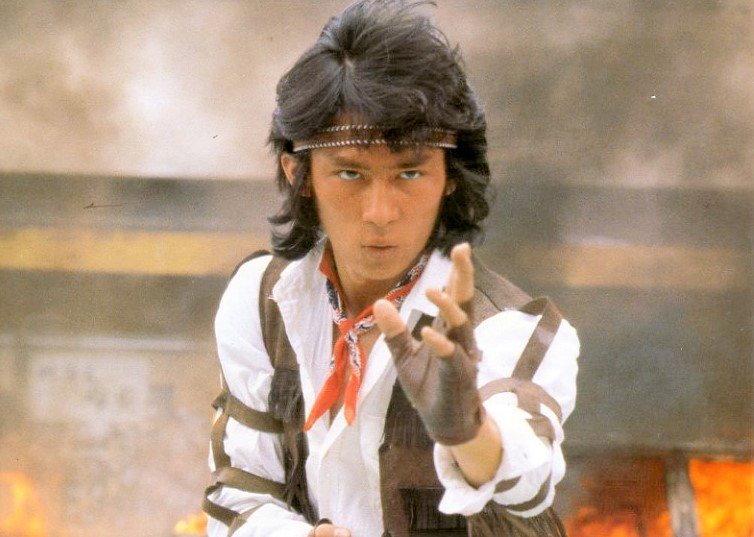
Roaring Fire makes its U.S. debut on Blu-Ray from Toy Robot Video on September 8.

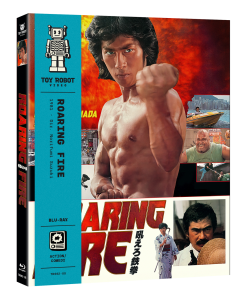
Director Norifumi Suzuki remains on my purview these days with the upcoming release of Roaring Fire from Toy Robot Video. This film has a bit of history with Suzuki’s predecessor, Shogun’s Ninja, in that Roaring Fire played a major role in that film’s proliferation. I go into that a little more in my review here, while I can certainly speak to the positives of this film as it gets reissued this time on Blu-Ray in the states.
The film reteams Suzuki with a trio of actors as well, namely from Shogun’s Ninja with Hiroyuki Sanada leading the cast. Japanese action stalwarts Sonny Chiba and Etsuko Shihomi also make appearances along with Masashi Ishibashi, best known as a recurring talent in the Street Fighter, Sister Street Fighter and Karate Baka Ichidai franchises. Other cast members include Mikio Narita and famed wrestler Abdullah The Butcher.
Chiba also handled the action, while co-starring in a supporting role that lends plenty of weight to the story even while on the peripherals. It’s imaginably a fun playground to be on when you’re someone like the charismatic Sanada and you’re breaking into cinema stardom, and here with a film that carries loads of international appeal with an American protagonist charting course to Japan and Hong Kong for the film’s runtime.
That journey begins firmly as the film introduces the gruesome death of a man in Hong Kong who we later learn is the estranged brother to our protagonist, Joji (Sanada), a rancher in Texas who makes the discovery via his surrogate father’s death bed. In an effort to uncover more about his family, Joji heads to Japan and is soon bombarded by a harem of naked and otherwise bikini-clad women before being manhandled in a pool by the hulking Spartacus (Abdullah).
Upon getting settled, Joji is introduced to his uncle, Ikki (Narita) and his blind sister Chihiro (Shihomi), and is gradually brought into Ikki’s business circle where Joji uncovers the chilling truth about his uncle and his line of work. It’s become clear that Ikki is not the man he presents himself as, particularly as someone still very much fond of the once-prevalent axis of evil and the third reich with certain iconography and artwork of a despotic oppressor hanging on the walls of his inner fortress.
Alas, it is not long after that when Joji is forced to fight for his life against a killer’s row of opponents for Ikki’s amusement, before setting out to retrieve a valuable jewel which Ikki seeks to use for his own nefarious ends. Thrust into a danger mission to retrieve the jewel, Joji must fight to save what remains of his family and his legacy.
Much like Suzuki’s predecessor, Roaring Fire takes on a life of its own with an esoteric blend of comedy and action to illuminate the more darker elements. It’s understandable to be a little dissuaded by the shift in tone given that the film starts off with a footchase followed by a body riddled with bullets in a bloody death, but the pacing isn’t so breakneck to the point where the film is unwatchable.
If you’ve seen Shogun’s Ninja, then you have an idea of what to expect with Roaring Fire, but with a few more gags and some other wild creative decisions along the way. Gratuitous nudity, scantily-clad femme fatales, wild costume changes, sweeping footchases across and between buildings of Kyoto, as well as boat chases and automotive and horse chases with ninja battles and stunts you would easily remember from some of your favorite Jackie Chan films are some of what’s in store for the tongue-in-cheek viewing of Suzuki’s work.
The performances come handy when needed, with Sanada resonating excellently on screen as the pointman in Roaring Fire, exuding charm and prowess in equal like the Emmy-winning sensation he would become more than four decades later. Further bolstering the film’s action star power is Shihomi whose vision-impaired Chihiro comes able-bodied as needed as a trained martial artist capable of using the wind to detect danger. Adding an extra layer of excitement to the film is Chiba who chimes in as a showman whose first move in the film is a magic show, followed by a peculiar puppet show with a story insinuating a rather triggering slew of semi-subtle details to Joji’s benefit.
Roaring Fire is especially the kind of film you’d enjoy if you’re either a fan of Showa-era action and crime flicks, or heyday spy epics. The film adds to an array of films that highlight Sanada and his Japanese action ilk in a way that still remains fresh to this day, and particularly with highlights from Shihomi, and from the electrifying Chiba in action.

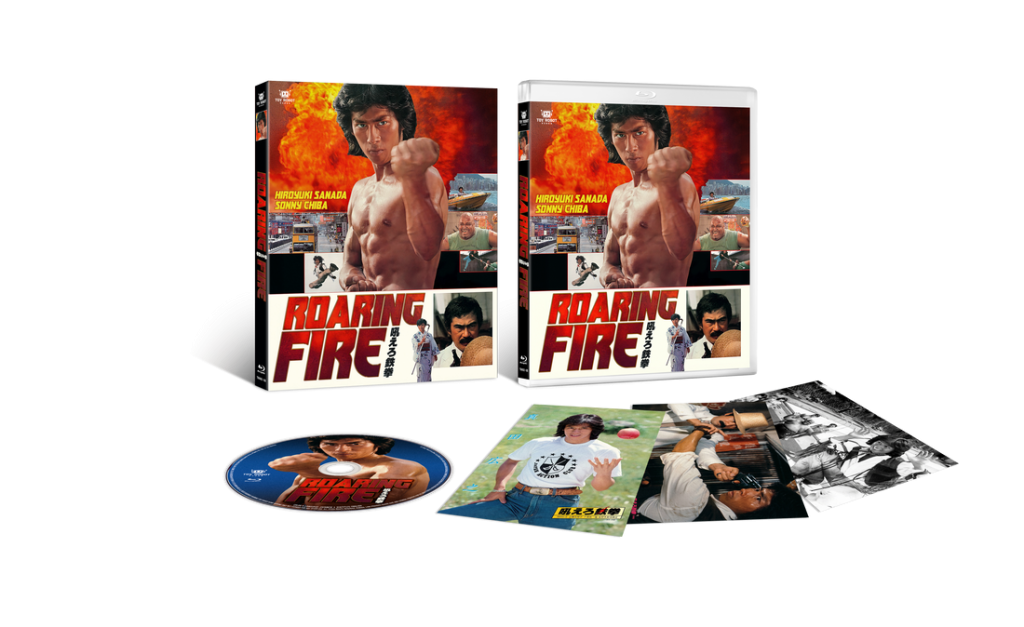
The Roaring Fire Blu-Ray disc comes with a ton of education aside from that of film historian Brian Bankston’s narrative essay about the film on its audio commentary; There are four seperate extensive and NEW featurettes totalling an hour about the film beginning with Japanese film critic Akihiko Ito with plenty to offer on the film and about its co-star, Sonny Chiba, and about the film’s reception overseas in the U.S. and Europe. One sidenote I’ll offer here is Ito’s mention of Mas Oyama’s visit to Los Angeles to a screening of Karate Bullfighter, and his distinct reaction to its venue at the time given the film’s target audience.
The flowers continue their rollout with dialogue by film critic James Mudge of easternKicks.com on the film’s success, pro-wrestling critic and film writer Chris Lines on the legacy of Abdullah the Butcher’s career and performance in Roaring Fire, and more chatter from film critic Clément Rauge on the “secrets” of its success. The disc rounds out with a trailer reel, and a TV spot.
This is a remarkable debut for Roaring Fire in the states, and a must-own if you’re a fan of Sanada and his JAC ilk. I first became a fan of Sanada through his performance in Royal Warriors many years ago and in The Last Samurai, so I’m thrilled to have finally caught up to this classic gem.