
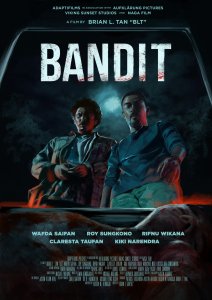
BANDIT Review: Brian L. Tan’s Alluring, Consequential Crime Noir
I’ve had director Brian L. Tan in my sights for about a decade now. I can’t – for the life of me – remember what initially took me to him at first, but he’s up to all kinds of good with a story about characters playing in deep shades of grey with Indonesian crime thriller, Bandit, which is currently playing at festivals.
Husain M. Atmodjo directs Tan’s slow-burn neo noir which takes some of its cues right out of films like Judgement Night (1993) and Time To Hunt (2020). Here, we meet Gatra (Wafda Saifan) and Tiar (Roy Sungkono), two best friends living way seperate lives from one another until fate brings them together once more without a sick sense of irony.
Gatra, a construction worker and father-to-be married is desperate to provide for Maya (Claresta Taufan), who is pregnant and just days away from having their baby. When Maya’s health complications arise and the bill is more than they can afford, Gatra turns to Tiar for help.
What follows is a moment drunken stupor, ensuing one in a series of really bad decisions involving a stolen car full of cash, evidence, and a dead body. To make matters worse, Gatra and Tiar’s efforts to pass the car off to unwitting enablers trigger a deadly escalating threat in the form of Beni (Rifnu Wikana), a hired killer and the triggerman responsible for the body in the first place.
Tan crafts a scintillating slow-burn crime noir with Bandit, set against Bali’s evening backdrop and pulsating nightlife with a sense of danger from the first major inflection point of the story. More importantly, it’s a film that perfectly reflects the kind of economic inequity that creates characters like these, which makes it easy to get behind our two protagonists, as questionable as their initial choices are first.
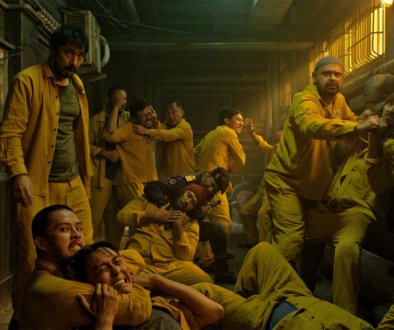
Set pieces and lighting lend poetically to a lot of what feels incumbent about Bandit. It’s a dark thriller with each scene serving as a reminder of the danger that draws near, including the most visually affecting scene where Gatra finds himself in a club brawl – chaos covered in kaleidoscopic strobe lights illustrative of his nightmarish and violent descent back into a world he was long done with.
Par for the course in this world are performances by Wikana whose unyielding delivery as Beni haunts you literally from the first shot of the movie. Co-star Kiki Narendra contributes the ancillary orole of Suroto, Tiar’s employer and a local crime boss who’s as much of a scumbag as he is useful as the the movie reaches its climatic finish.
Saifan and Sungkono are excellent as polar opposites from one another as the film explores their friendship and origins, piecing together their motivations and camaraderie in real time. The film is also keen to highlight Indonesia’s cultural and linguistic depth in a few ways; Karma becomes a little more topical as Maya’s concern with Gatra becomes clear. Bandit hits even harder toward the end of the movie, using a series of shots looking back on the calamity of events, so as to paint a vivid picture of the gravity of what’s at stake on matters of karmic reprieve.
It’s clear that Tan’s years working behind the scenes of major productions, and applying what he’s learned over the years is paying off. With Bandit, Tan invites Bali locals and audiences beyond with a story that’s compelling, human, and hopeful despite all of our flaws.

Native New Yorker. Been writing for a long time now, and I enjoy what I do. Be nice to me!