NYAFF XXV Review: In KUNG FU, Fanservice Fused Into A Ferocious, Often Frothy Fantasy Flick
Kung Fu enjoyed its U.S. Premiere at the 25th edition of the New York Asian Film Festival.
I’ve posted plentifully about writer/director Giddens Ko’s new movie, Kung Fu, ahead of its Taiwan release back in February. I never read the novel he wrote which serves as the basis for his film, but I knew that an IP like that had enough of an audience to keep my interest piqued, particularly as a film that took ten years to bring to life prior to its theatrical release. The film’s considerably huge budget has also been a factor amid the chatter leading up to the film’s opening weekend in Taiwan.
There are several factors to this film’s mystique as well, apart from many of its genre tropes which are intently visible, so as to pull viewers in and garner interest. The first few minutes of Kung Fu are comprised of an opening shot of the film’s supposed villain demolishing his way out of a murky building before cutting to a vignette of classic kung fu throwbacks and budaixi cinema, culminating a medley of fanservice right before Ko’s name drops on screen. From that point on, what feels like an obviously familiar plot begins to unfold in the way that martial arts fans are no stranger to, particularly if you’ve seen your fair share of heyday martial arts flicks with beggars somehow getting woven into the lives of ill-gotten protagonists challenged with enemies and the urge to become strong enough to take them down.
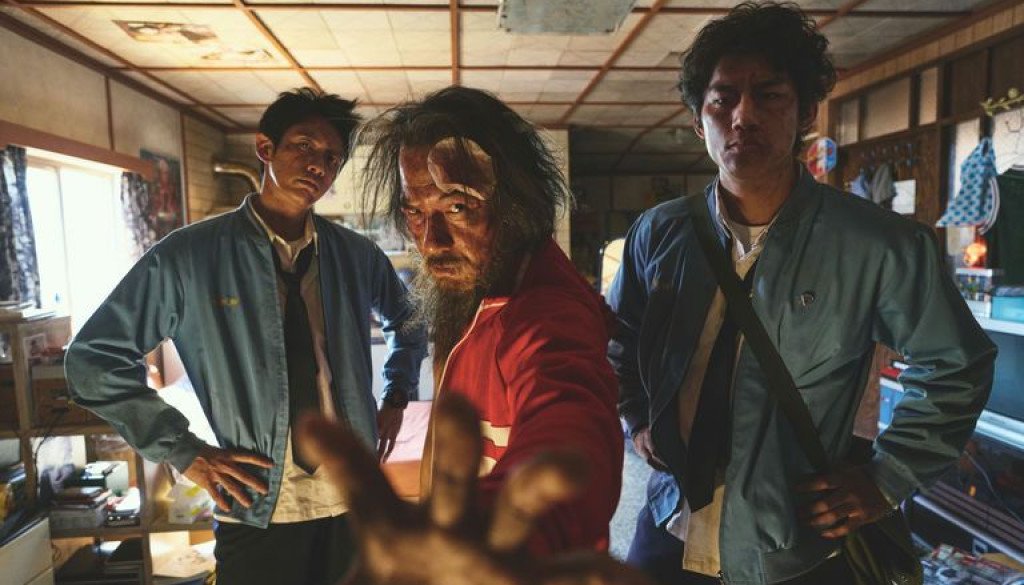
That’s the basic pitch we see in Kung Fu with the roles of Shao-Yun (Kai Ko) and Ming-Yi (Berant Zhu), two loser high schoolers hitting puberty something fierce. It’s not long after a kind gesture to a homeless beggar named Huang Jun (Leon Dai) that the two boys wind up in a confrontation with a violent gang, in the moments leading up to their prospective enlistment as disciples to Jun who, as the story tells it, bares centuries of kung fu wisdom and strength he wishes to pass on to a new generation of justice-seeking warriors.
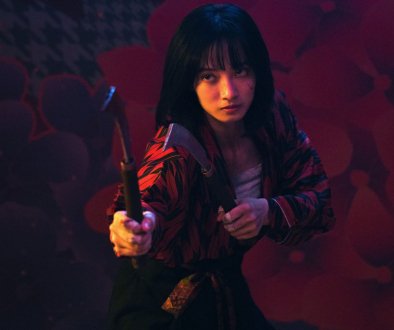
The first twenty minutes of Kung Fu finally leading up to the title card are enough to warrant what promises to be an exorbitant and maximalist coming-of-age action comedy adventure. Director Ko’s script spends a feasible amount of time exploring our main characters at each phase of the film, chronicling Shao-Yun and Ming-Yi and the high jinx that follow with one pondering romantic prospects with no-nonsense fellow classmate Yi-Jing (Gingle Wang), while the other considers proffering her gorgeous mother. Additionally, the residual effects of their training start revealing themselves in school, compelling Jing to approach Jun as a disciple, then bringing a total of three to Jun’s apprenticeship.
The movie is draped in big-scale spectacle, over-the-top silliness and high-flying action with choreography that’s more akin to superhero battles than anything. Just a few of the visual aspects of the laughs tend to be slightly more gross than the average viewer might be able to handle, so you may be inclined to turn away depending on how desensitized you are or aren’t. Kung Fu also takes an unabashed approach to a lot of its tongue-in-cheek humor as one scene finds Jun catching Shao-Yun in a moment that would embarrass most teenagers in situations less precarious. Others also see Shao-yun forced to mitigate with some of his own family woes, mainly including how his mother spends her time when she’s not playing mahjong.
The core rivalry in Kung Fu is set up like something fresh from a Shaw or Golden Harvest script with the entry of Lan Jin (Liu Kuan-Ting), a character situated as part of Huang Jun’s past in a spell of flashbacks that bring both Jun and Jin to the forefront in a scintillating way. This is where things start elevating to critical mass as the film reaches a major turning point halfway into the film, revealing an element to the story that makes it so much more than depicted during the film’s campaign, and equally intriguing for that matter.
Really that’s about all I can divulge without giving away the most meatier portions of the plot, while the action leaves a bit to be desired if you’re expecting kung fu shapes and blow-for-blow action direction. The action goes way bigger than that for the most part with just a few moments more grounded than others, as well as bloodier in some instances. Co-leads Ko and Zhu, in their latest reunion since Ko’s directing debut with Bad Education, get to test their might in character as Jun’s roughed-up disciples for most of the way, constantly thwarted until they can finally score a hit through unrelenting teamwork. Co-star Wang is slowly woven into the action with her character burgeoning with powers and strengths of her own before becoming much more involved in the second half.
Coordinated by Ji Chang-wook and Kim Kyung-woo along with their Triple A Stunt Team, the film’s action sequences are a mix of practical and VFX sequences with wires where it counts. Some shots even take their cues from fan favorites, including one scene in which a seriously wounded character tosses in a particular anime reference after getting nearly demolished in a way that I’m reluctant to convey here. Other nods of fan favor include characters in many of the flashbacks, including one that fans of directors like Chris Huang might easily recognize, and another in the form of a Chen Zhen likeness that’s too on the nose to casually look over in the film’s story development. To be clear though, aspects like that are written intentionally into the movie for good reason.
A lot of the action here also plays a role in the film’s message. There’s a spiritual aspect to kung fu that focuses greatly on Huang Jun and his internal struggles coinciding with his centuries-old grudge with Lan Jin. Yin & Yang is a concept applied generously in Kung Fu as Ko’s film finally comes full circle with its recapitulation and the incumbent finale that, for some reason or another also sees Ko’s character going full monty. Ko sure doesn’t hold back when he intends to build on a climatic moment during an intense battle, so take from that statement what you will.
Collect whatever memories you have of any suitable martial arts favorites you’ve seen over the years across Hong Kong, Chinese or Taiwanese markets (zany comedy, gripping drama, heroic bloodshed and high-flying stunts, etc.), and you can likely posit any of them to the multitudes of nods that director Ko throws in for Kung Fu. The other half of Ko’s re-imagining of his own literary work is a feat that expands on the genre comfort food that so inspires this flick, growing its concept into the kind of full-tilt, bonkers fantasy adventure Taiwan hadn’t seen since the golden era of martial arts cinema in the region. It makes Kung Fu a welcome addition to a demographic of consumers who are always hard up for the next interesting thing in the genre regardless of what other market projections might suggest.

Native New Yorker. Been writing for a long time now, and I enjoy what I do. Be nice to me!