FOR THE CULTURE: A Word With BLACK MOON Director Nicholas Ortiz
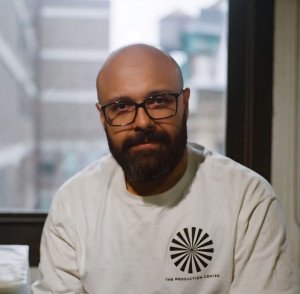
Credit: Jacob Watson
I first met director and NYU film instructor Nicholas Ortiz in person back in 2019 at a friend’s screening here in Queens. By then, I’d already done a bit of coverage on him through a shortfilm called “Black Betty” which, I can confirm, is somthing he still visits on the table to this day.
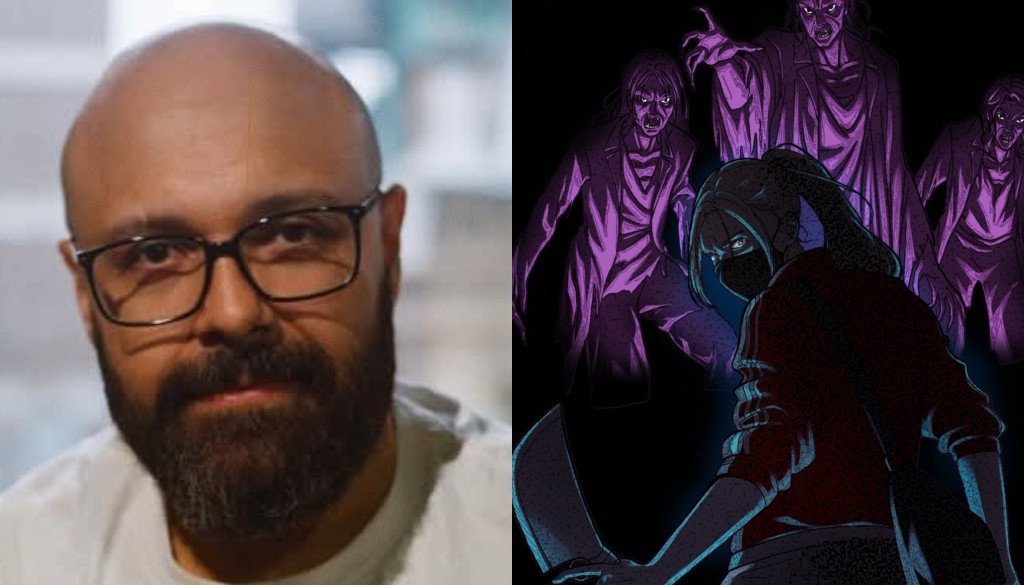
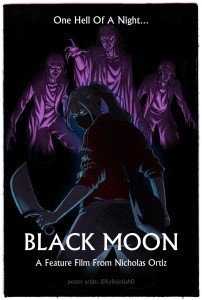
In the meantime, his latest major area of focus is over at the official GoFundMe campaign page where he’s now efforting to help raise funds for action horror thriller, Black Moon. Ortiz is currently looking at casting options as well as development continues, marking his most recent return to feature directing in well-over a decade and a half for his Deviant Children Productions label.
Black Moon has an appeal to it too. It’s set in the course of one New York City night and follows a bike courier-slash-vampire hunter battling to find the bloodsucker who bit her in order to save her soul before dawn. The project is also promising an authentic approach to its practical effects coupled with martial arts and action setpieces that pretty much land this thing right up my alley.
The GoFundMe is about five-k short of its current goal as of this post as the fundraiser continues, and you can read more about it by tapping here. Beyond that, I’m taking a moment to help lend a voice to Ortiz’s cause where he lends more into his background as a director, his inspiration for Black Moon and his hopes for independent cinema as we know it.
What motivated you to make Black Moon your next feature endeavor after fifteen years?
After the success of Jugando Con Fuego, I got a lot of offers to transform it into a feature film. It was already pushing it at 40 mins, so to extend the film an additional 40 mins at first seemed like an achievable endeavor. However, when I wrote the film initially, I hadn’t planned to have it be a feature, it was always going to be a short. And I have experience with shorts turning into features and its rarely ever good. However, Bobby, Jefferson, Orlando and I all agreed that shorts can be fun and great practice but it was time to start making movies again.
I carry a large notebook of script ideas and this one kept sticking out to me, a vampire film set in one night. This was before SINNERS dropped, so hard to explain to people that Ryan Coogler’s film WASN’T a source of inspiration. My first feature film, SIODMAK, is admittedly not great. It’s slow, its too long at nearly two hours, it’s stuffed to the gills with ideas that I was unequipped, both technically and artistically, to achieve properly. But fifteen years is a long time and I am now starting to feel my command over the format. The idea of BLACK MOON really struck me as one of those ideas we don’t get to see too much of these days. A constantly moving, ticking clock film, a return to the 90 min thrill ride of the eighties and nineties. We start where most films would be at the halfway point and use that moment, of a vampire slayer chasing the ones that attacked and bit her, as the launching point and we rarely slow down from there. It just gave this energy to the story that felt right and I knew it was my return to feature films.
You’ve continued directing shortfilm projects and collaborating with other creators. What influences do you draw from as a filmmaker when writing and putting together stories?
Working with R4 Films and just seeing the work of my peers on the East Coast is always a source of inspiration for me. I love seeing the creative process and that is usually enough to get the gears turning in my head as well. Of course I have my film heroes such as Guillermo Del Toro, Sam Raimi, Steven Soderberg and Robert Rodriguez. I re-read “Rebel Without A Crew” this year, its such an important book for filmmakers, the brass balls of someone that young and yet look how far ahead of the curve he was at the time. And he did it without thinking it would be the career maker for him, just that he wanted to do it.
Lately though, I have been more inclined to partake in art outside of films that highlights Latino talent. I’ve been reading more books from Puerto Rican authors like Gabino Iglesias. Even Bad Bunny, with that incredible album, Debi Tirar Mas Fotos, it’s really made me want to not just make movies, but bring my culture – New York Latin Culture – to the forefront.
Part of your campaign for Black Moon has been referencing career highlights of “YouTube directors” who’ve made 2026 a banner year with their releases, namely with films like Iron Lung and Obsession and Backrooms. What are some hopes and predictions you have on the longevity of this kind of momentum we’re now seeing?
I hope it means a return of the “Maverick” filmmaker. The young guns, right? Take a shot of someone well outside the industry, give them a little support and then get out of the way. I also hope it means a return of the mid-budget picture. To know that these films made the studios so much money and it only cost 1/100 of a Disney film to do it. The talent is out there, they are putting their work out there for you to enjoy for free, so there is no reason we should be relying on remakes, reboots and requels to keep this industry going. And the Gen Z audience wants something new and original.
I think we will see a bit of that to start, with both big and little studios scooping up talent where they can, I’m hopeful of a new indie film renaissance happening over the next few years. And maybe I’ll get to be a part of that.
I seldom talk horror as it’s not really my part of my purview, although it does tend to surface adjacently with some projects, and I’m intrigued with what a film project like Black Moon has to offer as a genre hybrid. What is it about horror that strikes you the most?
Horror is, for me, maybe the most filmmaker-driven genre. It’s really about your style and your storytelling that is on display and there is nowhere for you to hide. So many great directors cut their teeth in horror. And when I started, I wanted to be a horror filmmaker, I found myself drifting more into action over time. And a lot of action these days really pulls from horror. Think of Gareth Evans’s work, how the Raid films and even Havoc have this sense of mounting dread behind them, how the bad guys come in waves almost like zombies in a Romero film, breaking through walls and such. But there is nothing like the thrill of a really well timed scare or how a truly tense sequence sends a ripple of unease into an audience. It’s also the one genre you will know immediately if the audience is with you or not. BLACK MOON will have action, but I also want to make sure it’s also a good horror film as well.
Can you share some experiences you had with making Siodmak at the time, and also expand on what the state of independent filmmaking was for you back then compared to now in this regard?
Its Inauguration Day, 2009. Barack Obama is being sworn in as the First Black President in US History… and I’m getting fired from my day job! It was also the height of the recession and just after the housing bubble burst. I like to think I was just a sacrifice to save their then-small business, so I kind of get it. But the year prior, I wanted to make a film and now I had the free time to make one. So I made a short, Little Red Riding Hood and then just jumped right into making a feature, which became SIODMAK. At the time I had help in the form of PA-turned-Executive Producer, Veronica DiFeo, who helped me immensely and I don’t know if I can ever truly pay her back. I had also met Orlando Cruz for the stunts and that not only kicked off our partnership but also our friendship. And my cast may be some of the most forgiving group of people I have ever met. I was living with my Grandmother in the Bronx, I turned her basement into a morgue, it was insane! Two years I spent working on it and I still don’t quite know how I got it done.
I think the state of indie filmmaking hasn’t changed that much. The tech got considerably better, honestly the cameras and lenses and lighting available now are miles ahead of my video gear in 2009. But even with the technological advances, we are still trying to make a dollar out of .99 cents. We still have to ask people to help, support, follow, click, like. Social media has made it easier than ever to connect, but because of the bad apples in the industry, people want guarantees and that’s hard to do even at the Hollywood level. We saw what happened to the BLADE reboot. Even Oscar winners are having a hard time getting movies off the ground.
At the very least, we can now produce images on par with the pros, but we are still lacking in the resources and support.
In your view, how often is it that what is shot on film differs from what’s on script? Do you have any first hand examples to share?
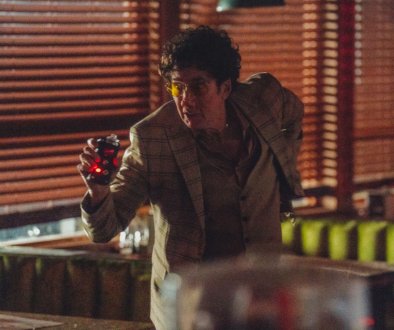
There was a quote, I heard it from Quentin Tarantino but I believe he was quoting someone else, so I’m gonna try my best to recall it correctly: “The last draft of the script is the first cut of the film and the final cut of the film is the final draft of the script.” So for example, my script for JUGANDO CON FUEGO contained completely different scenes with James Forge and his wife and for Tony Lobo, as well as his henchmen. The end sequence was to take place in a small town main street, like a Western classic shoot out. However, I wrote everything before I ever stepped foot on location in Tijuana, Mexico and once I did, it always impacts how the story plays out. It’s day ONE of production when everyone and everything is on location that the film becomes a living thing and now it tells you what kind of movie it wants to be. I’ve found that rather than fight it, just to let it happen because I think it makes a stronger end result.
I remember you shared a script treatment of sorts with me for Black Betty which was a short you did, and thinking back on it, I was curious to learn if there were any plans to maybe revisit that, or even expand on Jugando Con Fuego if there were perhaps plans in place or just maybe brewing at the time.
Krystal and I still talk about BLACK BETTY, and I would love to have Betty back in my life again. That short was really around the time where I felt the more secure in my skills as a filmmaker and it’s been that way since. If we did, I don’t know if I would go with the treatment I had written or try something new. What I had was pretty strong though, I can’t imagine I would start fresh.
JUGANDO CON FUEGO was a great time and it also allowed me to meet Bobby and Jeff as well and now we have that partnership with them. Again, if the time is right to see if James Forge is still alive and kicking, we will know. Right now, I’m happy to be a Producer on the SHADOW FIST series for R4 Films, we just wrapped ORIGINS at the end of July.
Talk about some of the ways you’ve had to adapt to the industry as a filmmaker since you started out and up to now, particularly with the advent of generative AI and the notion that avoiding it doesn’t change its so-called “inevitability.” To be clear, my position is that that sort of statement is a cop out in favor of a tool that works to the detriment of everyone, especially artists, just in my view.
I agree with you! Sure, it COULD make my job easier, but I don’t do this because it’s easy, I do it because of the hardships and the sense of accomplishment of overcoming those hardships is one of the most rewarding experiences one could have. I hate that so many new filmmakers just don’t want to go through the growing pains of being creative and get right to the money making. I see it in the students at NYU, they are afraid of being bad at making films, but I have to remind them that they have never done this before. You are supposed to be bad at something you have never done before. And the GEN AI videos are awful, no one looks real, nothing moves like a person, it’s just every idea thrown into a blender and then poured into a glass and they try to tell you it’s a steak. NO! It’s slop!
Not to mention its wasting drinking water as well as stealing from those who put in the time and effort. Have I had to adapt? No, because I don’t even want to come near the stuff. I don’t really foresee GEN AI lasting too much longer, the regulations are coming and they are gonna be brutal.
Can you share some info on what and where the casting process for Black Moon is at the moment? Are there any particular names you’re circling or people you’re bringing back from past projects?
So far, we are looking at a fully new cast, looking for new faces, which is part of our new internal rule of bringing our unique style to the masses. I have reached out to the reps to a name actor for a role, however all that depends on us getting to the 150K budget we are aiming for to make that happen. If we can get them, great! I would be excited to work with a New York Legend of my youth as well.
You became a father recently as well. That has to be one helluva role you’re living out off camera.
I will never complain about film shoots being hard. EVER. AGAIN. Its been the most taxing, tiring and yet wholly rewarding milestones I’ve done. I’ve been loving it really and maybe one day, my son will deem me acceptable for school show and tell.
Any final words to share with readers as we make our exit from this interview?
It’s my belief that despite what we are all collectively experiencing today, there is no better time to make an impact in your or someone else’s life. Make that leap, buy that camera, shoot film, paint, sketch, write, sing, do it all, because it is in the darkest of times that the most indelible art is created. I’m making BLACK MOON because I feel this call to be a filmmaker, but it also is allowing me to work through my own frustrations in life and I think that will resonate with the viewing audience once they see that. And it will be a fun time too.

Native New Yorker. Been writing for a long time now, and I enjoy what I do. Be nice to me!