NYAFF XXV Review: In WE’RE NOTHING AT ALL, But We’re All We’ve Got
We’re Nothing At All enjoyed its North American Premiere at the 25th edition of the New York Asian Film Festival.
Director Herman Yau’s We’re Nothing At All starts off with a short build-up to a devastating double-decker bus explosion before cutting to an outro-style scroll-up of opening credits, almost to insinuate the end of a film in darkly jocular fashion. It’s a hell of a way to start a film with a plot inspired by a real-life incident that took place on Valentines’ Day almost three decades earlier, and if you have a pack of smokes and need to light one up right away, by all means, I’m sure the role that lead actor Patrick Tam plays – a chainsmoker as he so states a little later in the film – would understand. Thus, think nothing of it provided that you’re in the confines of your own comfortable space unlike the poor souls ignited in that moment of terror.
Invariably, if you were entirely new to the film’s origin as I was and you don’t smoke, then all you could really do is sit there with your jaw halfway to the floor, as intended by Yau if only to steal your senses and make note of just how ominous things are about to get in this film’s unfolding. Having captalized on the momentum accordingly, We’re Nothing At All segues to the incumbent introductions of the multiple lives afflicted in this story – gruesomely delineated in spells of body parts and evidence articles then being accounted for by Ho-Leung (Tam), a former detective specially brought in by the department as a forensics expert to help identify the bodies, as well as the cause of the explosion.
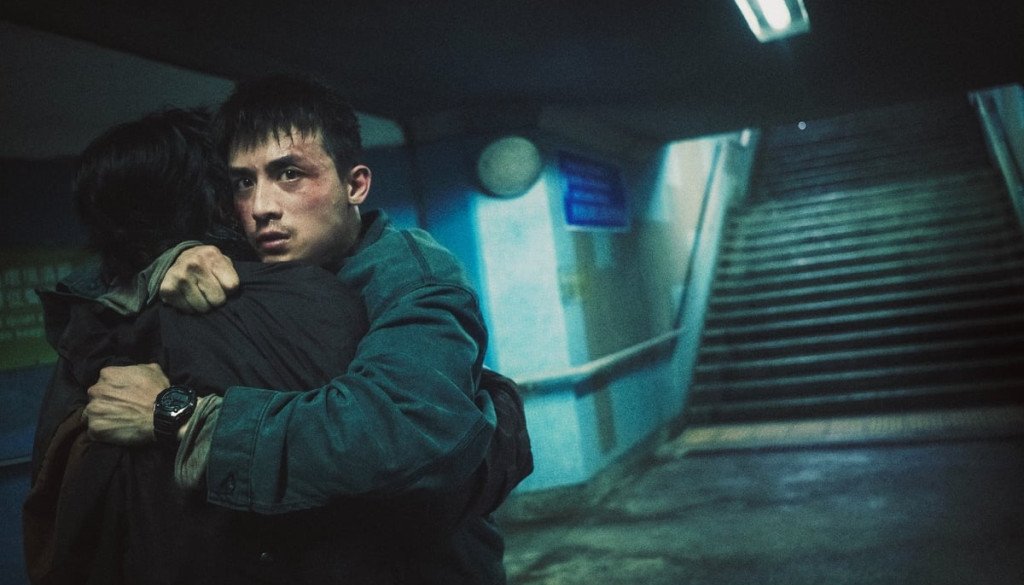
Cut to a watch and its wearer in a bustling night club scene, and a stolen wristlet and its inebriated owner raising hell about its whereabouts as the immediate preface to the stoic tale of a laid off construction worker named Yiu-Fai (Anson Kong). Burning off some energy at an outdoor basketball court one evening, Yiu-Fai soon becomes the subject of inspiration for Ike (ANSONBEAN), a pho-sketch artist and a loner who isn’t long for a place at home when a myopic lecture from his parents about marriage forces him to come out with his sexuality. Kicked out and separated from the only person who genuinely loves him: his sister, Ike is taken in forthwith by Yiu-Fai, which sparks a romantic connection between the two men.
Respite moments of genuine love and affection, however, are beleaguered by unraveling spells of introspection and healing fueled by revelations of unhealed childhood trauma and abuse, and the performative assurances of living in a “booming” city wherein pockets of the economically downtrodden are further hindered by – in cases as shared by the likes of Ike and Yiu-Fai – homophobia and bigotry, even to the point of feeling like the only real way to find peace is to end it all. Where Leung fits in is made even remarkably clear as someone whose past is also brought into question on the flipside of this film, combing harrowing crime procedural with gripping social narratives, underscoring crucial themes that dare you to spark conversations pertinent to change with unflinching resolve.
Kong and ANSONBEAN are mesmerizing at times, between moments of intimacy and revelation, and even pain, and I was especially compelled at times by Kong’s performance. The most discerning scene for me is perhaps the catalyst that sets the final leg of the film in motion, illustrating Yiu-Fai’s troubled past and the role his own parents play into his internal demise. It’s one of a few areas apart from the film’s grisly framework that gets immensely brutal and conflicting, bearing in mind the suspense of seeing everything else unfold and knowing how it’s all going to happen, and being left to piece it all together in the aftermath.
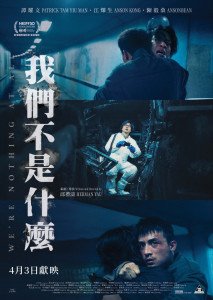
The film comes backed with requisite and equally compelling supporting performances, including co-star Thor Lok who enters earlier on as Ike’s brief partner, Andrew, and recurs later on in the film as the story peels back many of its layers. You’ll also get to see how that ties into Leung’s life, namely with outdoor BBQ restauranteurship he shares with his loving wife (Kearen Pang); There’s a scene later where Leung discloses the lengths he would have gone to in his own detriment were it not for the “really kind soul” that spoke to him one evening. It’s a moment that mirrors not only see with our two mains, but also speaks to the Yau’s humanistic messaging, co-signed by the kind of tangible tragedy that ought to inspire everyone to do and be better. In We’re Nothing At All, you get a film that certainly leaves you wondering if only that were the case.

Native New Yorker. Been writing for a long time now, and I enjoy what I do. Be nice to me!