Japan Cuts XIX Review: In SUZUKI=BAKUDAN, Humanity’s Biggest Test Yet Isn’t Pass-Or-Fail…
Suzuki=Bakudan enjoyed its U.S. Premiere at the 19th edition of JAPAN CUTS: Festival of New Japanese Film.
Actor Yuki Yamada continues to draw my attention to almost whatever he does. That includes his starring turn of late with Akira Nagai’s latest explosive thriller, Suzuki=Bakudan, which also joins him one of the more versatile actors I’ve covered, Jiro Sato. The movie is based on Katsuhiro Go’s 2022 novel and was written for the screen by Shota Okada and Yuho Tadano, and released theatrically in Japan late last year, titled ばくだん or “Bomb” which I called it in my coverage accordingly; the thought of the film’s title attributing itself to one of the main characters never crossed me, but I guess that’s the title we’re going with.
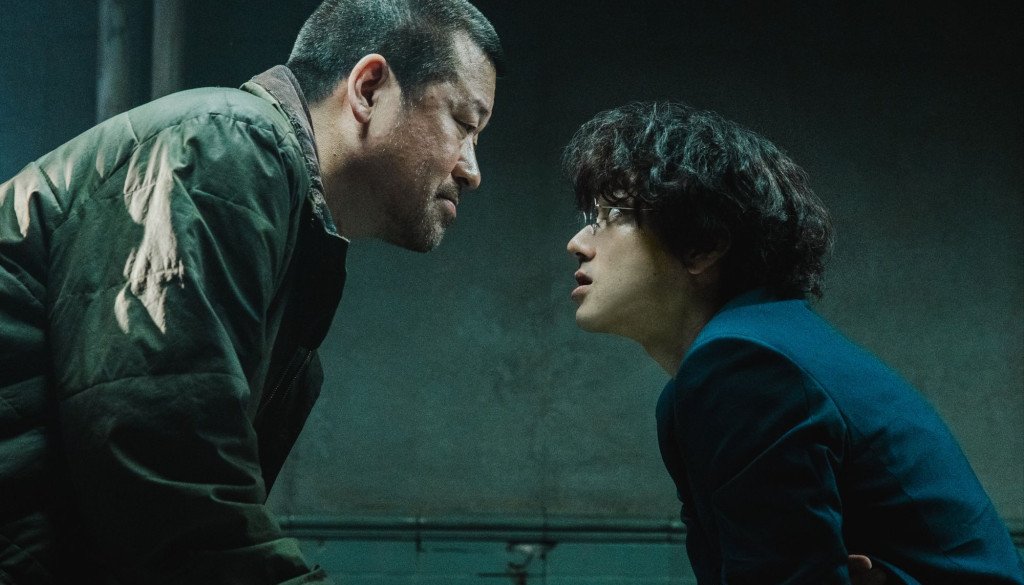
Thus, we get a character named Suzuki (Sato), a drunk amnesiac who gets arrested for getting into a fight with a vending machine and basically disturbing the peace one evening. Once interrogated, little do they know that Suzuki’s lowbrow calamity would become the least of their worries. Before anyone knows it, a raft of bombs begin going off at almost an hourly rate, ensuing nationwide panic with Suzuki, the suspected bomber, still in custody, although there is a catch: Suzuki may not be the assailant in question, and even so, his flippant demeanor and supposed “gift” of clairvoyance continues to substantiate him as a person of interest as investigators trudge on.
That effort envelopes a small raft of players in this scintillating tale, namely detective Todoroki (Shota Sometani), beat cops Yabuki (Ryota Bando) and Koda (Sairi Ito), and interrogators Kiyomiya (Atsuro Watabe) and his subordinate, Ruike (Yamada). As time rolls on and the first few bombs go off, the inspectors find themselves locked in a game of wits and will with Suzuki who, for all intents and purposes, still maintains his innocence as someone who can see the future as a witting participant in helping the police bring this crisis to a close. Nonetheless, the clock remains ticking, and with the ongoing inquiry of a past scandal stirring in the backdrop, it’s just a matter of time until the next or last bomb determines whether if Suzuki was as much of a culprit as his own words and actions suggest he is, or if he was a mere pawn in someone else’s sick and twisted game.
Nagai’s movie charts a harrowing tale of suspense and billowing mystique that never loses ground. Sato’s role seethes as an anomalous caricature holding a mirror towards you while daring your reflection against his own – a character that keeps you guessing every brain-teasing step of the way. You’d think that Nagai saw what Christopher Nolan and Todd Phillips accomplished in bringing DC villain “The Joker” to life in their iterations, and perhaps saw inspiration in such a character so as to manifest it in his own way through an adaptation of Go’s novel that when he’s pit against the protagonists of this story, you can’t help but see the similarities and view them as admirable in the least.
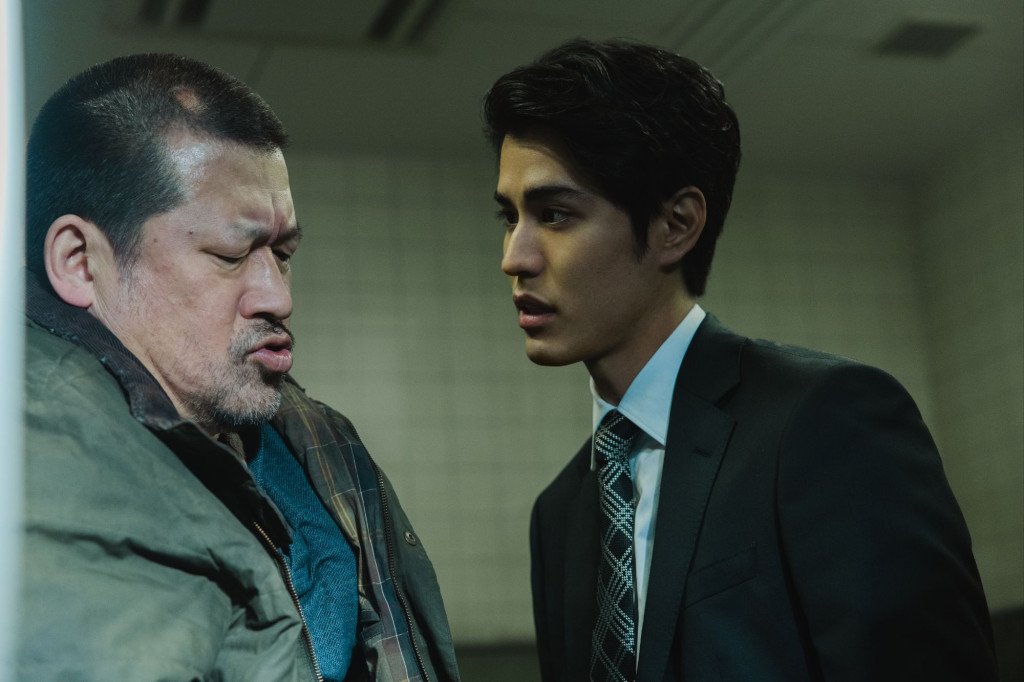
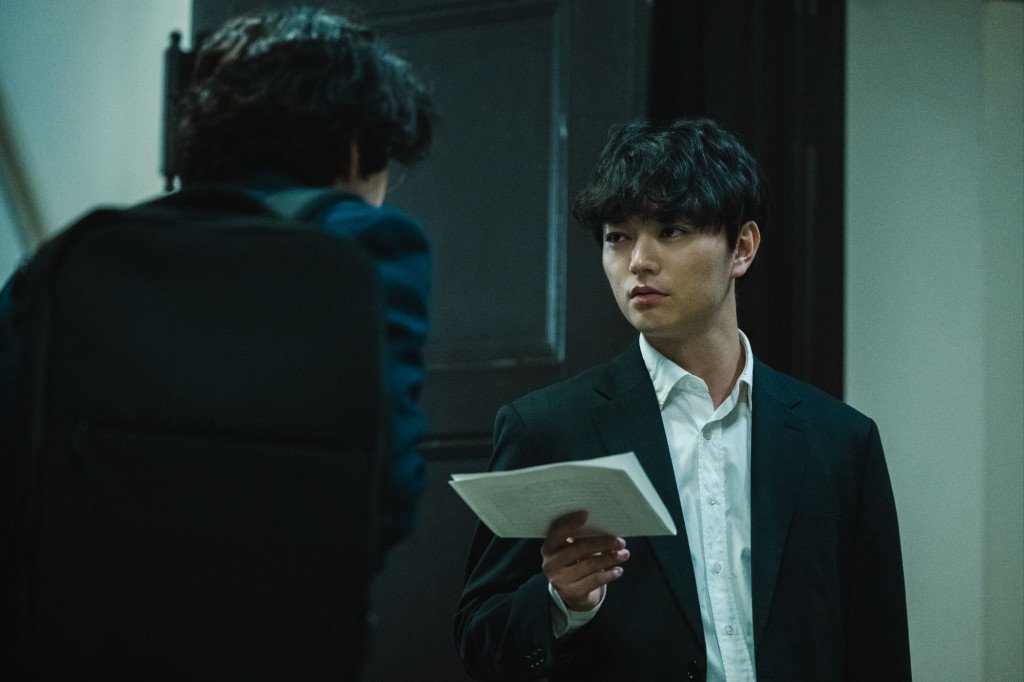
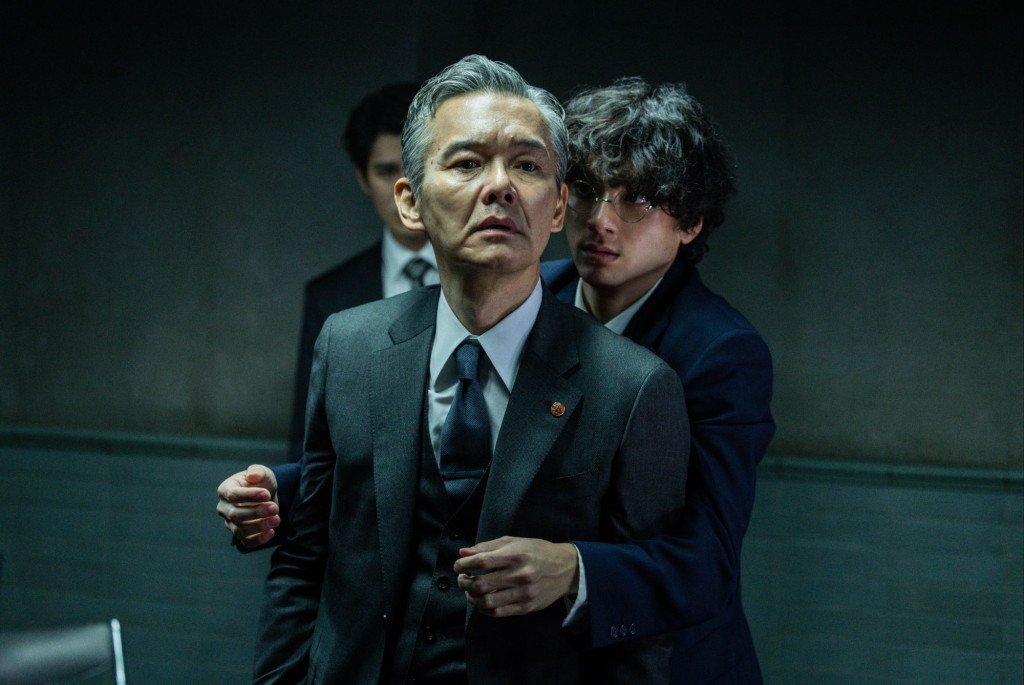
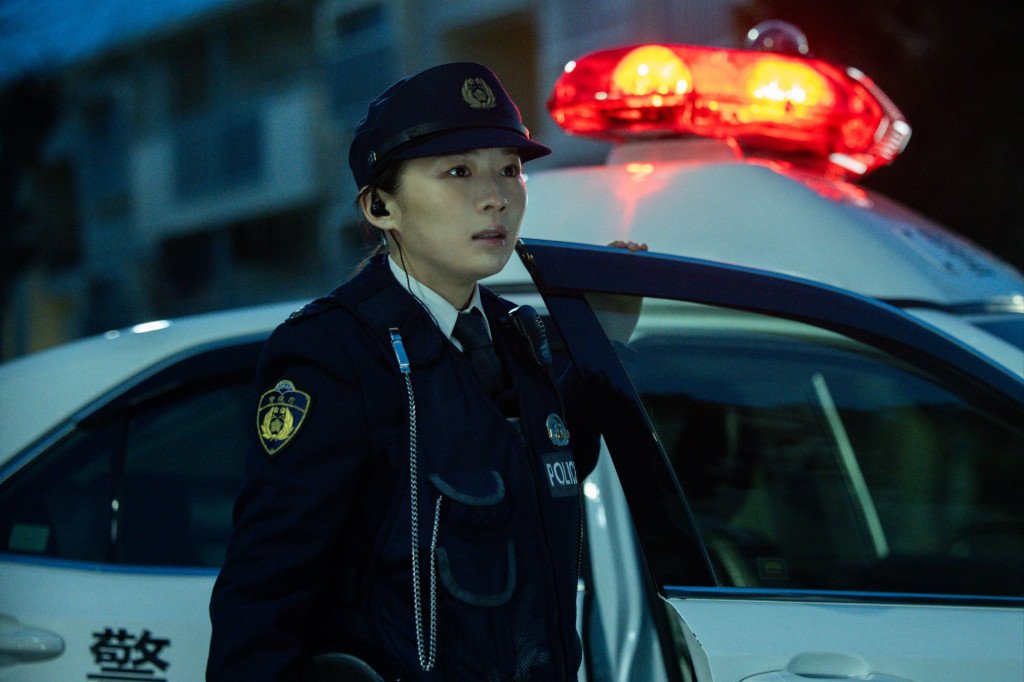
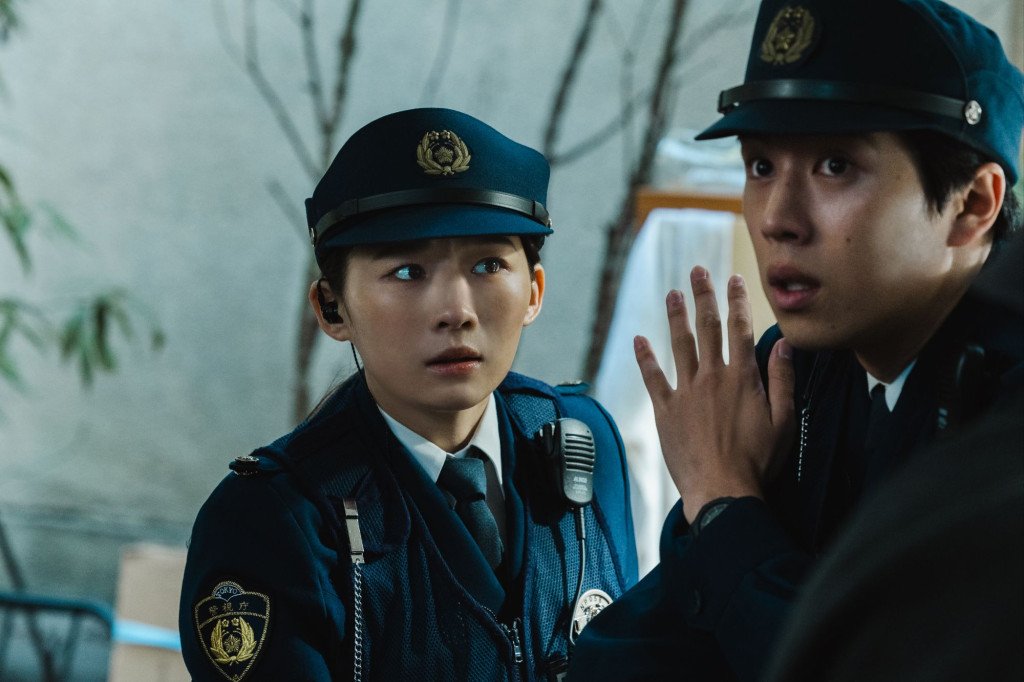
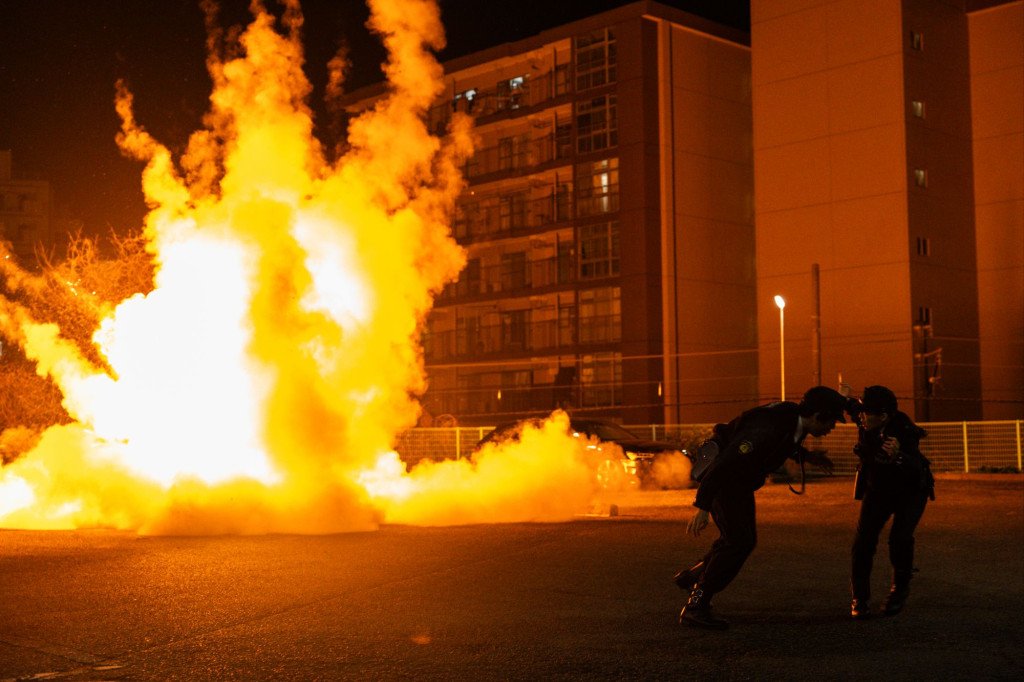
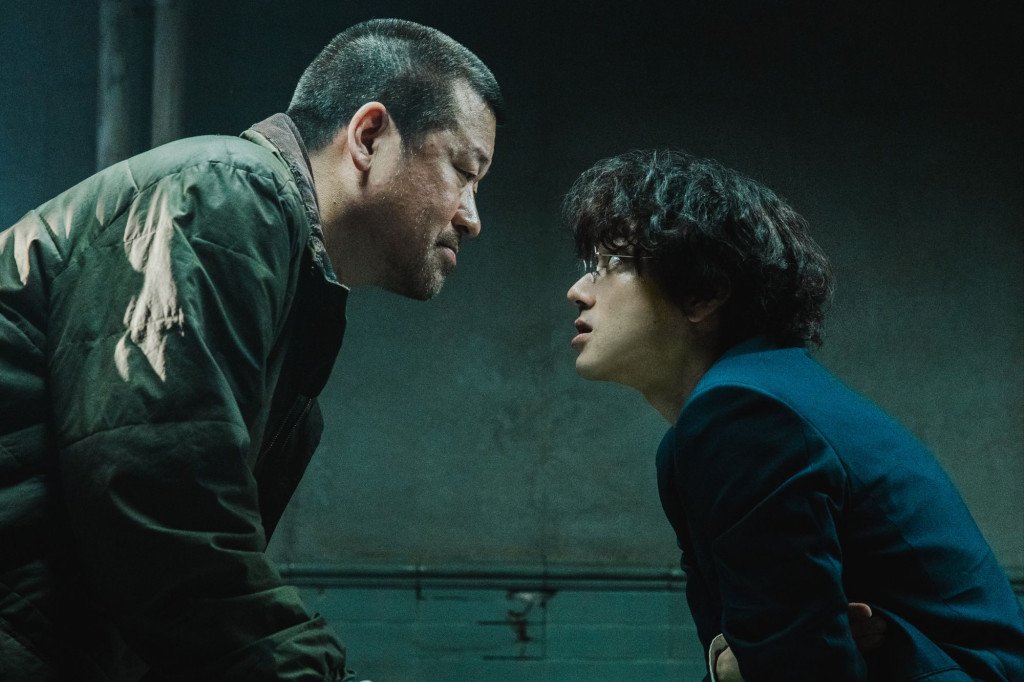
Almost certainly, that’s where the rest of our players come in, namely Yamada’s role, Ruike, Kiyomiya’s younger, mild-mannered subordinate who is way more than what he lets on. From the moment he enters the film, and of course judging by the footage and promo assets, you already get the feeling that he’s about to play a larger role in the events of things. Smartly, Kiyomiya’s involvement sets the exposition aptly for a palatable transition amid the film’s teeming twists and turns, which also include the film’s culmination of events outside the station, notably that of officers Yabuki and Koda and their inquiry into Suzuki’s background.
Moreso on the peripherals are actors Kanichiro, Yui Natsukawa, and Masaya Kato whose characters lend amply to the film’s progression, exploring the the controversial moment in which another detective’s lewd actions trigger a lateral paparazzi-loaded nightmare for colleagues and loved ones, while only a few brief flashbacks touch on the case of a woman abandoned after a sexual assault. Explosive sequences and devastating imagery contribute to the film’s gruesome tone, partly including one scene in which a man is tied to a chair before he’s blown to smithereens and one poor soul loses a leg in the calamity. By then, the film’s chilling allure is already set in, delivering a wholesale look at a society’s reaction to the alleged bomber’s maniacal messaging via social media, as well as a haunting, nihilistic profile of just how far an impasse as violent as this one had to go before the case is finally solved.
By the end credits of Suzuki=Bakudan, you’re left with a movie that beseeches you to consider the extents of someone grieving loss, or experiencing things like loneliness and the general, sweeping unfairness of a hand that life deals you, thereby decentralizing binary themes of good and evil. Merely questioning who wins and loses in this labyrinthine thriller of enigmas and bodycounts is to lose the plot completely, making Suzuki=Bakudan just the kind of film to sit and talk with. Alcohol optional.

Native New Yorker. Been writing for a long time now, and I enjoy what I do. Be nice to me!